


'/%3E%3C/svg%3E)
In Lviv region, SFE “Forests of Ukraine” has increased timber sales compared to the pre-reform period
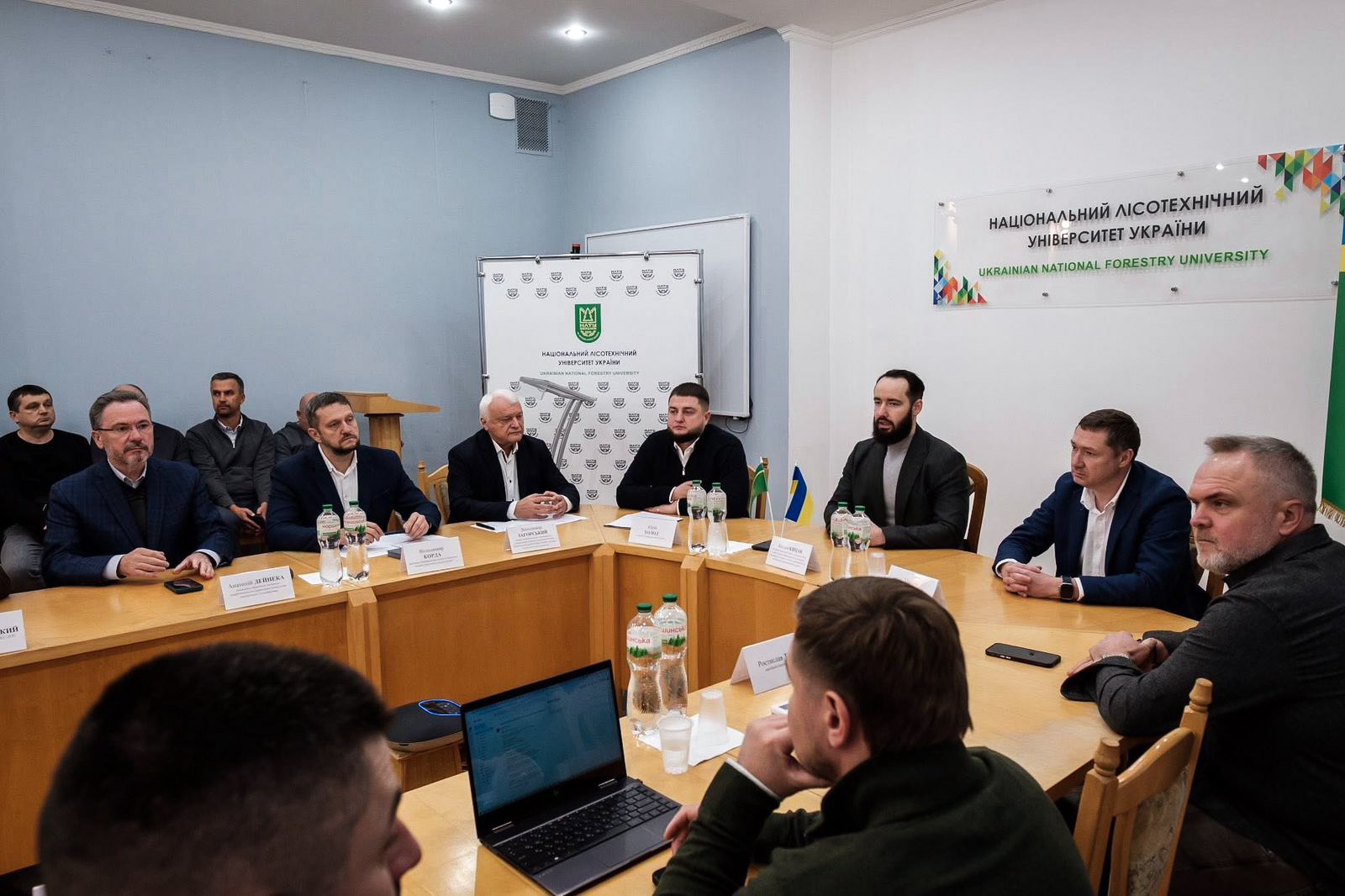
Today, another meeting between business representatives, authorities, and foresters took place in Lviv, initiated by a group of Members of Parliament. The issues discussed have already been repeatedly raised during similar meetings in other regions.
The main concern of wood processors remains the rising prices, which have been increasing almost every quarter since the beginning of the year. However, this year SFE “Forests of Ukraine” offered businesses a risk-hedging tool — forward contracts with fixed prices. In total, the company offered almost 2 million m³ of timber for half-year trading. Interestingly, during the first such auctions at the end of last year, 16% of the timber offered remained unsold (including nearly 30% of industrial firewood). Therefore, there was an opportunity to fix prices and work steadily, but not all businesses took advantage of it in time.
Currently, in the Lviv region, the share of buyers who have declined contracted timber is only 4%. In other words, the current price level is market-based: businesses continue to purchase timber, and warehouse stockpiles are not increasing.
As for harvesting volumes, some meeting participants emphasized that Ukraine should aim for levels comparable to Germany or Poland.
However, harvesting in Ukrainian forests is strictly regulated by legislation and normative acts, and its increase does not depend on the operational efficiency of SFE “Forests of Ukraine.” Every year, environmental requirements become stricter, while permitting procedures grow more complex and costly.
SFE “Forests of Ukraine” manages 64% of the forests in the Lviv region, of which over 83,000 hectares are forests with restricted use (nature conservation, scientific, or historical-cultural purposes). For example, in the largest Lvivske Forestry Management Unit of SFE “Forests of Ukraine,” only 40% of the forests are designated for commercial use.
The share of exploitable forests is gradually decreasing. Over the past few years, the number of protected areas (PAs) within the company’s forestry units in the Lviv region has increased by almost one-third. The resource potential is also reduced by frequent changes to legislation and regulations over the past 5–7 years — what was permitted yesterday is often prohibited today.
Naturally, this affects harvesting volumes. Nevertheless, SFE “Forests of Ukraine” manages to maintain stability.
In 2020, the volume of main-use logging in state forestry enterprises of the region was 441,000 m³, while in 2024, it reached 450,000 m³. A slight decline this year occurred due to two factors:
A reduction in sanitary felling, the purpose of which (as a reminder) is to improve forest health, not to supply raw materials.
Changes in the regulatory framework for reformation felling — such operations can resume only after updated forest management plans are approved.
It is also worth noting that before the reform, 15% of harvested wood in Lviv’s state forestries was used for their own processing, amounting to about 120–130 thousand m³. Today, the volume of timber offered for sale has not only not decreased but actually increased compared to the pre-reform period. Hence, there are no objective reasons for dramatizing the situation.
SFE “Forests of Ukraine” is using every available opportunity to ensure wood processors have access to resources. The Carpathian branch is currently updating forest management plans, most of which will expire in 2025–2026. However, nearly all forest users, as confirmed by Lviv regional authorities, admit facing difficulties in getting them approved.
This year, the company has also begun training staff to transition to modern forest management practices — close-to-nature forestry. Long-term research by Ukrainian scientists has shown that introducing such technologies could increase the annual wood stock growth from 5 to 12 m³ per hectare. According to the State Forest Agency, this could eventually yield an additional 1.5 million m³ of resources while preserving forests.
However, close-to-nature forestry requires significant investment in road infrastructure and specialized equipment. Large-scale funding and international donor support can only be attracted through the corporatization of SFE “Forests of Ukraine”, a process that has already begun.