


“We initiated six different audits of the enterprise,” said Oleksii Kucher, Chairman of the Supervisory Board of SFE “Forests of Ukraine.”
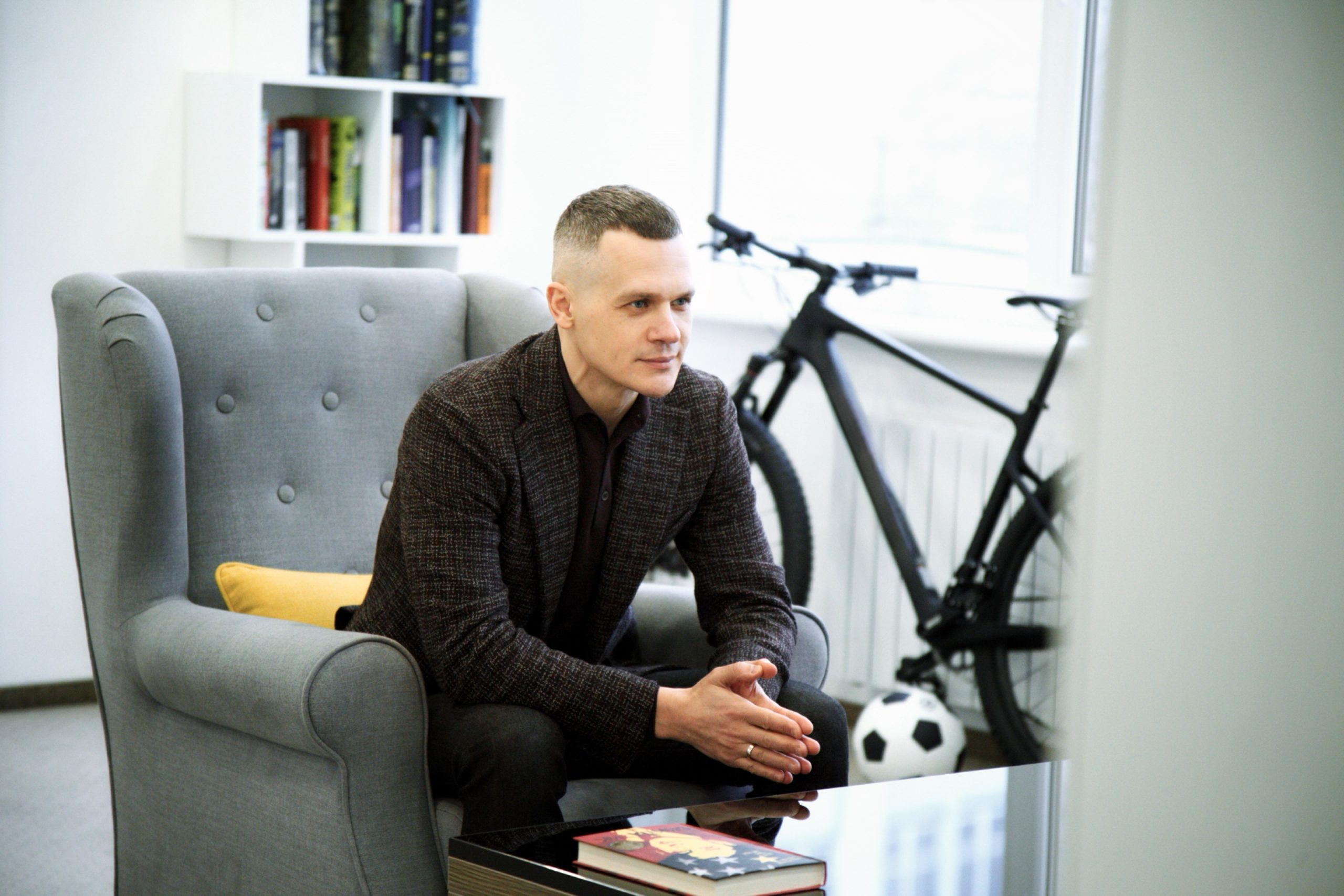
On the results with which the state forestry sector is concluding this year, and the changes awaiting SFE “Forests of Ukraine” in 2026, Oleksii Kucher, Chairman of the Supervisory Board of the state-owned enterprise, told RBC-Ukraine.
Next year, the country’s largest state-owned enterprise, SFE “Forests of Ukraine,” is set to be transformed into a state-owned joint-stock company.
The transformation process began back in February, when the Cabinet of Ministers established an independent corporate governance body for the company — the Supervisory Board of SFE “Forests of Ukraine.”
The Supervisory Board includes three independent members from Canada, Finland, and Latvia — Markiyan Vytvytskyi, Janne Harjunpää, and Roberts Stripnieks — as well as a state representative, Oleksii Kucher, Head of the State Regulatory Service, who was subsequently elected Chairman of the Board.
We asked Mr. Kucher about the results with which SFE “Forests of Ukraine” is concluding the year and about the plans going forward.
— Mr. Kucher, at the most recent meeting the Supervisory Board approved the interim report on the achievement of the operational objectives of SFE “Forests of Ukraine,” as well as the report on the implementation of the financial plan based on the results of the first three quarters. In other words, are you satisfied with the company’s performance?
— We cannot but be satisfied with the financial indicators. The financial result has exceeded our expectations. The profit of SFE “Forests of Ukraine” may reach UAH 8 billion — more than double the figure recorded last year. Profitability has also increased by more than twofold, to nearly 30%.
Based on the results of the first 11 months, the enterprise has paid nearly UAH 15 billion to budgets at all levels. In my view, in terms of the growth rate of its financial and economic indicators, SFE “Forests of Ukraine” is among the leaders of the state sector of the economy.
— But is the reason behind this the increase in timber prices?
— To a large extent, yes. However, this is not an administrative increase in tariffs. All products, except for firewood for households and the social sector, are sold by SFE “Forests of Ukraine” exclusively through open, transparent, and competitive auctions.
The enterprise has not only adhered to this principle but has taken a further step toward openness by beginning to publish information on all contracts concluded on the exchange. Anyone can verify who contracted which products and at what price.
— Consumers, that is, businesses, are far from pleased with rising prices and are calling for an increase in timber supply.
— Let me remind you that for two years foresters have been urging changes to the legislation and regulatory framework that complicate permitting procedures, restrict harvesting, and lead to the loss of valuable resources. The Supervisory Board has also sought to draw the attention of the authorities to this existing problem. Finally, over the past six months, the necessary decisions have begun to be adopted.
We see that the Government and the Ministry of Economy are paying significant attention to the development of the forestry sector and to ensuring the operation of the wood-processing industry. Incidentally, we invited Minister Oleksii Soboliev to take part in a meeting of the Supervisory Board. This is something that has never happened before.
However, it must be understood that it is impossible to increase harvesting simultaneously, as any deployment of logging crews to a felling site is preceded by a lengthy bureaucratic permitting procedure. In addition, more than 2 million hectares of forests in Ukraine are objectively inaccessible for economic activity — due to temporary occupation, landmines, their location in areas where military units are deployed, and similar factors.
— Be that as it may, foresters now have more funds — how is their use being monitored?
— Let me clarify: first and foremost, it is the state that has benefited from the increase in timber prices. More than half of the proceeds from its sale are directed, in the form of taxes and fees, to budgets at all levels. At the same time, the forestry sector itself has also received additional financial resources.
Within the scope of its mandate, the Supervisory Board is making every effort to ensure oversight of how these funds are used. In particular, we have introduced the following control mechanism: the management of SFE “Forests of Ukraine” must, on a monthly basis and no later than the 10th day of each month, submit to the Supervisory Board information on expenditure contracts with a value exceeding UAH 1 million.
In addition, we receive data across all key areas — the implementation of the annual investment plan, the preparation of forest management documentation, the status of the registration of property rights, and data from the register of personnel-related orders. In other words, we maintain constant oversight and keep a close watch on developments.
Back in May, we approved the allocation of UAH 500 million to increase wages for production personnel — foresters, assistant foresters, forest rangers, drivers, tractor operators, and loggers.
The average salary at the enterprise rose from UAH 22,000 to UAH 29,000. This made it possible to halt staff outflows. At the same time, the Supervisory Board decided not to award quarterly bonuses to the Director General until the end of martial law. It is worth noting that this was the DG’s personal initiative, which the Supervisory Board supported.
The Supervisory Board seeks not only to analyse the information provided to it, but also considers it essential to have its own independent instruments for collecting and systematising such information.
For this reason, the Supervisory Board has decided to establish an Internal Control Service (ICS), comprising the internal audit, compliance (oversight of compliance with laws, regulations, and internal policies), and risk management units. The ICS staff is appointed by and reports directly to the Supervisory Board. These are our “eyes,” which, I hope, will allow us to objectively assess all processes within the enterprise. A new Head of Internal Audit has already been appointed.
— In one of your interviews, you mentioned that the Supervisory Board had put forward an initiative to conduct an independent external audit. What is the status of that initiative?
— The tenders have been completed and the contractors selected. LLC “Crowe Erfolg Ukraine” will conduct the audit of the financial statements for 2025, while LLC “Grant Thornton Legis” will audit the period from 2022 to 2024. Grant Thornton Ukraine is part of the global Grant Thornton network, which is represented in more than 150 countries worldwide. The total revenue of the global network amounted to USD 8 billion in 2024. Crowe Erfolg Ukraine is a member of Crowe Global, the world’s ninth-largest international audit network. In Ukraine, both contractors rank among the top ten largest audit firms.
We also extended invitations to companies from the “Big Four” audit firms, but unfortunately they did not express an interest in participating in the tender.
— Procurement is a particularly sensitive issue for the state sector. What is the situation now?
— There has been undeniable progress: 97% of the procurement budget is allocated through open, competitive tenders — a level never before achieved in the state forestry sector. Savings from procurement since the beginning of the year have exceeded UAH 700 million. For the first time, logging services — the enterprise’s largest procurement item by volume — are being put out to open Prozorro tenders in full (100%).
Nevertheless, trust but verify. The Supervisory Board has approached the State Audit Service of Ukraine with an initiative to conduct an audit of the public procurement of SFE “Forests of Ukraine” for 2025, focusing on compliance with legal requirements, the justification of expected contract values, the lawfulness of the procedures selected, and the efficiency of the use of funds.
In addition, the Supervisory Board has applied to the Antimonopoly Committee of Ukraine with a request to conduct a review of public procurement procedures for any indications of violations of competition legislation.
— How did the story of the procurement of an enterprise resource planning (ERP) system end?
— The ERP procurement process has not yet been concluded. The concept for introducing the system was developed prior to the establishment of the Supervisory Board, and the Board members now have a different vision. One of them — Markiyan Vytvytskyi — has experience in implementing ERP systems in Canada.
In our view, it is impossible to foresee everything in advance; it is more appropriate to move step by step, consistently implementing the most important modules of the management system. Next year, the ERP procurement process will be reset and relaunched. We keep this issue constantly in focus.
— Judging by the so-called “Mindichgate,” recruitment for state-owned companies is not always conducted in a transparent manner. What should be done about this?
— The only solution is an independent and objective assessment. At the initiative of Markiyan Vytvytskyi, it is planned to conduct an independent comprehensive evaluation of the company’s top management in terms of their professional competence, effectiveness, and business ethics, as is standard practice worldwide. An HR company with the appropriate expertise is to be selected through a competitive process.
In other words, next year SFE “Forests of Ukraine” will be subject to six different audits — two independent external audits, a state audit, an internal audit, an HR audit, and a review by the Antimonopoly Committee. Based on the results, we will certainly draw the necessary conclusions.
In addition, the Supervisory Board has approved the Company’s Anti-Corruption Policy and Code of Business Ethics, which were developed jointly with the Basel Institute on Governance in line with best international practices.
— Prime Minister Yuliia Svyrydenko recently stated that supervisory boards must ensure proper and prompt responses to notifications from law enforcement agencies regarding offences involving officials. How can this be implemented in practice?
— As early as this summer, we took the initiative and approached all key law enforcement agencies — the Office of the Prosecutor General, the State Bureau of Investigation, the Bureau of Economic Security, the National Anti-Corruption Bureau of Ukraine, and the National Police — with a request to provide information on criminal proceedings involving the management of our enterprise. For a timely response and the adoption of objective decisions, the Supervisory Board requires verified facts. In other words, we have already employed all control instruments available to us.
— You are a very active Supervisory Board…
— That is indeed the case, without exaggeration. Over the course of this year, ten Board meetings have already been held, with one additional extraordinary meeting planned before year-end. More than thirty working meetings and briefings have also taken place. Three committees have been established, which have held nine meetings in total. All Board members are participating as actively as possible in discussing and resolving issues. We have established a corporate secretary’s office, as it is physically impossible for one person to cope with the volume of tasks we set.
— But your level of activity presumably does not appeal to everyone. Publications have appeared on Telegram channels regarding a criminal proceeding related to the payment of remuneration to members of the Supervisory Board…
— The circumstances surrounding the opening of the proceedings are unknown to me, but initiating such a case at the request of a public organization is not particularly difficult. As for the media campaign against the Supervisory Board, the list of information resources involved makes it clear that the campaign is fully paid for. The Board members understand that this is an attempt to exert pressure and perceive it in an entirely appropriate manner. Such campaigns will have no impact on either our position or our work.
In fact, all payments to members of the Supervisory Board are made transparently and in strict compliance with the law. Each member of the Supervisory Board of SFE “Forests of Ukraine” has entered into a civil law contract approved by an order of the State Forest Resources Agency.
The amount of remuneration is determined on the basis of the Policy on Remuneration of Supervisory Board Members approved by the Cabinet of Ministers of Ukraine (Resolution No.1369 dated 29 November 2024).
In addition, the enterprise reimburses members of the Supervisory Board for expenses incurred in the performance of their duties, subject to documentary confirmation. For example, this includes travel expenses from the place of residence to the venue of a Supervisory Board meeting.
— What are your expectations regarding corporatization?
— “Forests of Ukraine” is an enterprise of European standard, and in the longer term, of global standing. Corporatization is a path toward recognition by international partners. It also creates opportunities to attract international financing for the company’s development, as the current organizational and legal model of a state-owned enterprise is not fully understood in the Western world.
In Ukraine, corporatization makes it possible to channel proceeds from the sale of non-core assets into development. And, of course, corporatization means corporate governance. In my view, all the best corporate governance tools are already being applied.
— What changes can be expected in the forestry sector?
— We have recently approved the Strategic Development Plan of SFE “Forests of Ukraine” for 2025–2029. The main focus is on balancing economic performance and environmental considerations, as well as on the development of close-to-nature forestry. We plan to increase harvesting within the limits established by law, with a gradual reduction in the share of clear-cutting and an improvement in forest quality through the formation of natural forest stands that are more resilient to fires and climate change.
Supervisory Board member Roberts Stripnieks headed “Latvian State Forests” for more than twenty years, has extensive experience, and I am very grateful to him for his active involvement in the development of the strategy.
One of the most pressing challenges remains the issue of forest demining. Conventional technologies would require multibillion investments and decades of work, making innovative solutions essential. In this area, Supervisory Board member Janne Harjunpää is working actively. Consultations are under way with Ukrainian institutions responsible for demining, as well as with international manufacturers of specialized equipment.
– You once said that with the establishment of the Supervisory Board, the enterprise becomes more institutionally autonomous. Have “Forests of Ukraine” indeed gained institutional autonomy with the establishment of the Supervisory Board?
— This year, “Forests of Ukraine” went through a several-month period of turbulence. The position of the Supervisory Board ensured stability in the company’s operations: during this time, there was no loss of managerial control or external interference in personnel or production processes. This is precisely what I mean by gaining institutional autonomy.