Hundreds of millions invested in forest fire protection: Why “Forests of Ukraine” is investing heavily in firefighting equipment
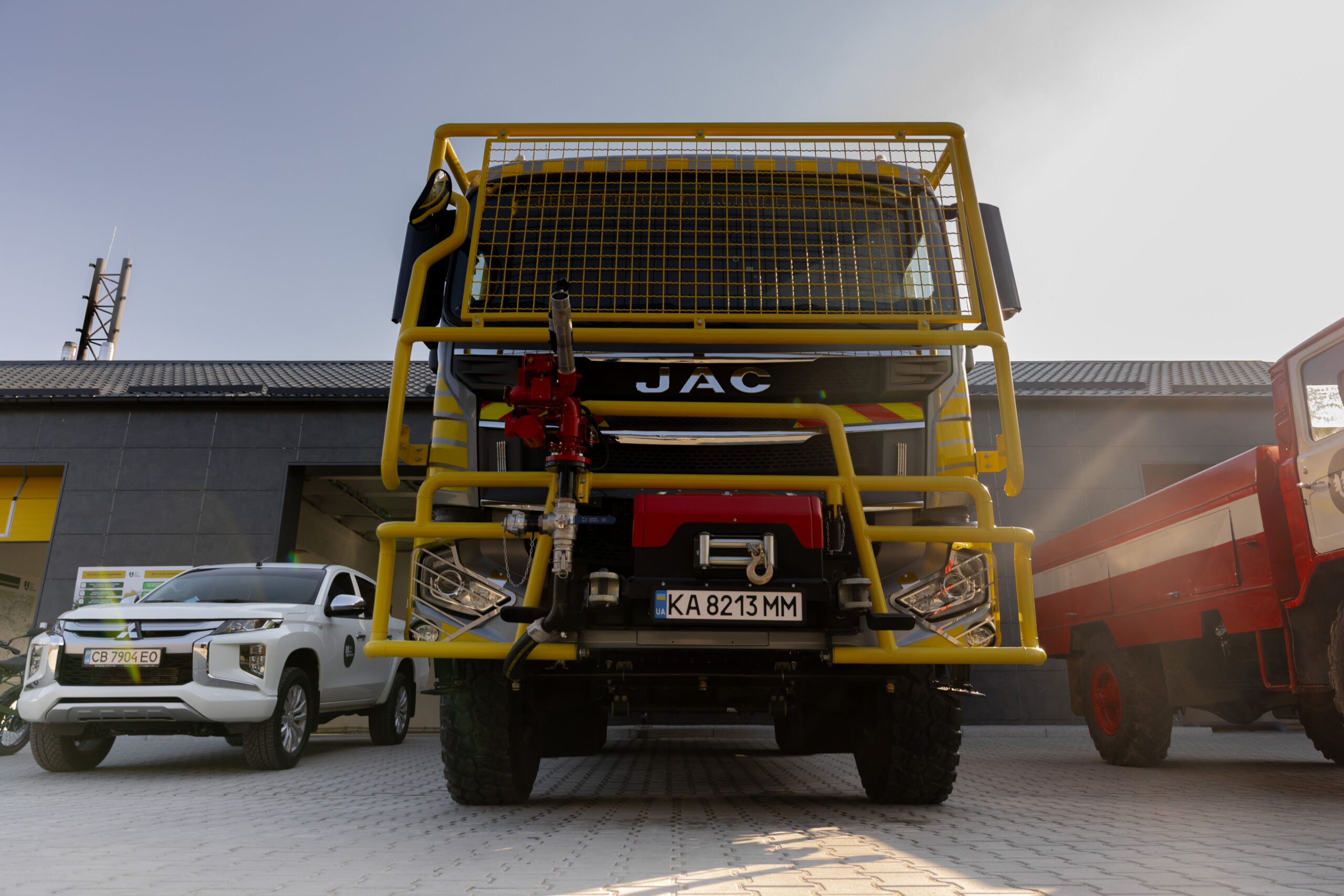
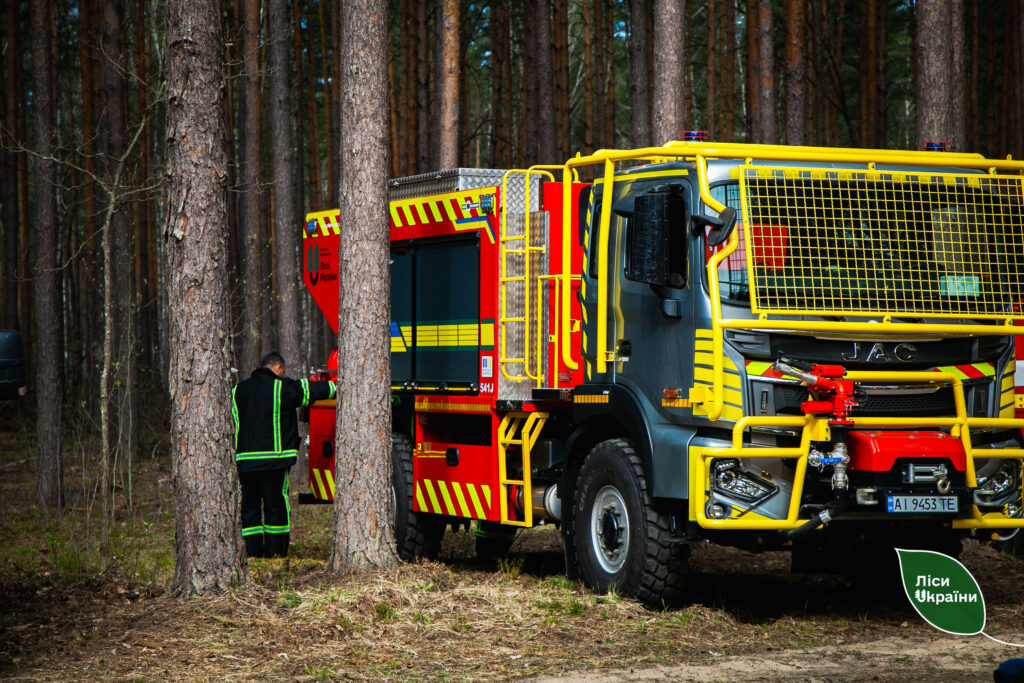
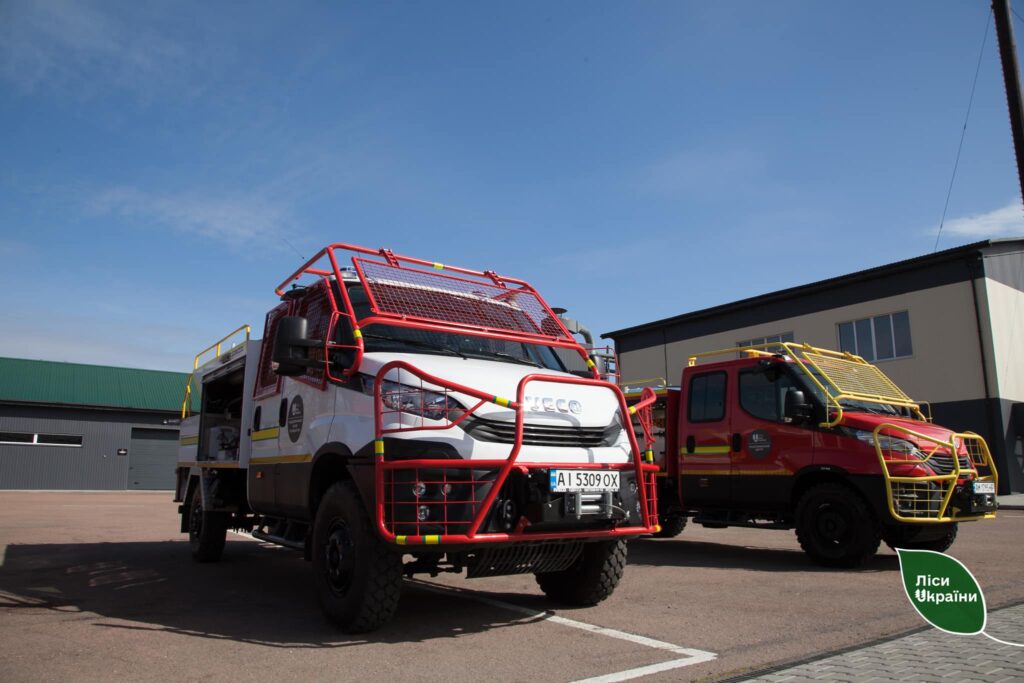
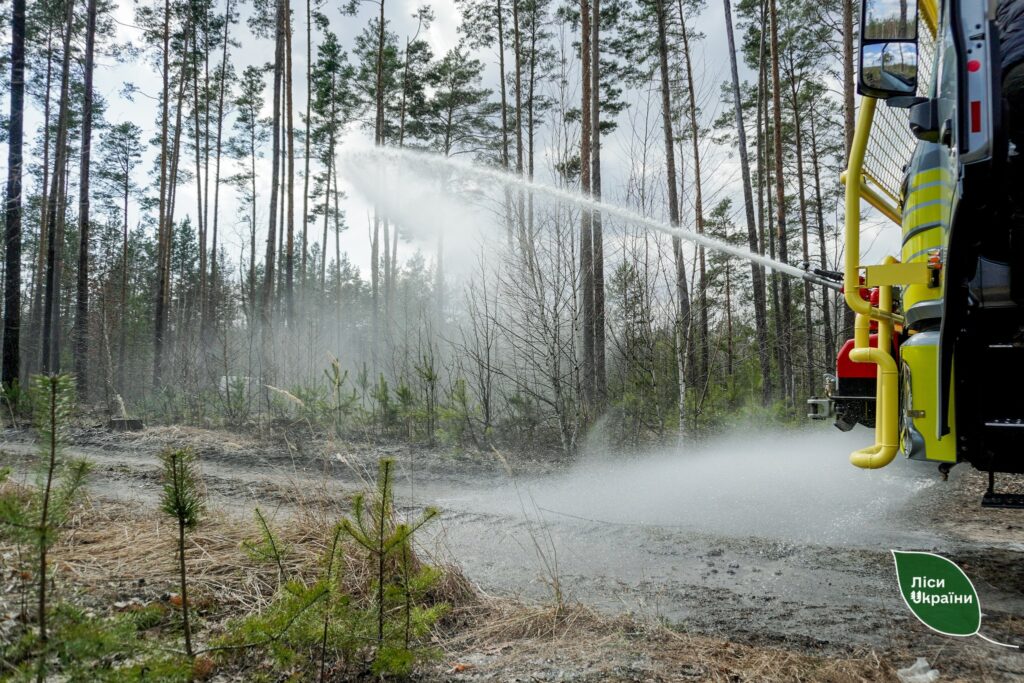
This year, SFE “Forests of Ukraine” has planned record investments in firefighting equipment and gear — approximately UAH 400 million. This is three times more than last year.
Why does “Forests of Ukraine” invest in developing its own fire protection system instead of outsourcing this function to the State Emergency Service (SES)?
For example, in countries such as France, Italy, Greece, or Poland, the primary responsibility for extinguishing forest fires lies with fire and rescue services or civil protection authorities, while foresters mainly provide local knowledge — maps, access routes, and water sources.
In countries where there is no single operator and forest management is carried out by various types of forest users — private, municipal, and state-owned — it is logical for fire response systems to be centralized at the state level.
In Ukraine and several post-Soviet countries, a different model has historically developed. Full responsibility for organizing fire suppression lies with the forest user. The SES is involved only when a fire reaches the level of an emergency situation, as defined in Article 2 of the Code of Civil Protection of Ukraine.
According to the criteria established by the Ministry of Internal Affairs of Ukraine, the SES may be involved in extinguishing forest fires only when the fire area reaches the threshold of an emergency situation (over 50 hectares).
Responsibility of the forest user: regulatory framework
In 2004, the State Forestry Committee of Ukraine issued Order No. 278 “On Approval of the Fire Safety Rules in Forests of Ukraine.” The document clearly states that “the direct implementation of measures for forest fire protection, suppression, and accounting is assigned to permanent forest users.”
Currently, the largest forest user in Ukraine is SFE “Forests of Ukraine,” managing nearly 7 million hectares of forest area.
This means that SFE “Forests of Ukraine” is responsible for firefighting, while other structures may be involved, but the final responsibility for results lies with foresters.
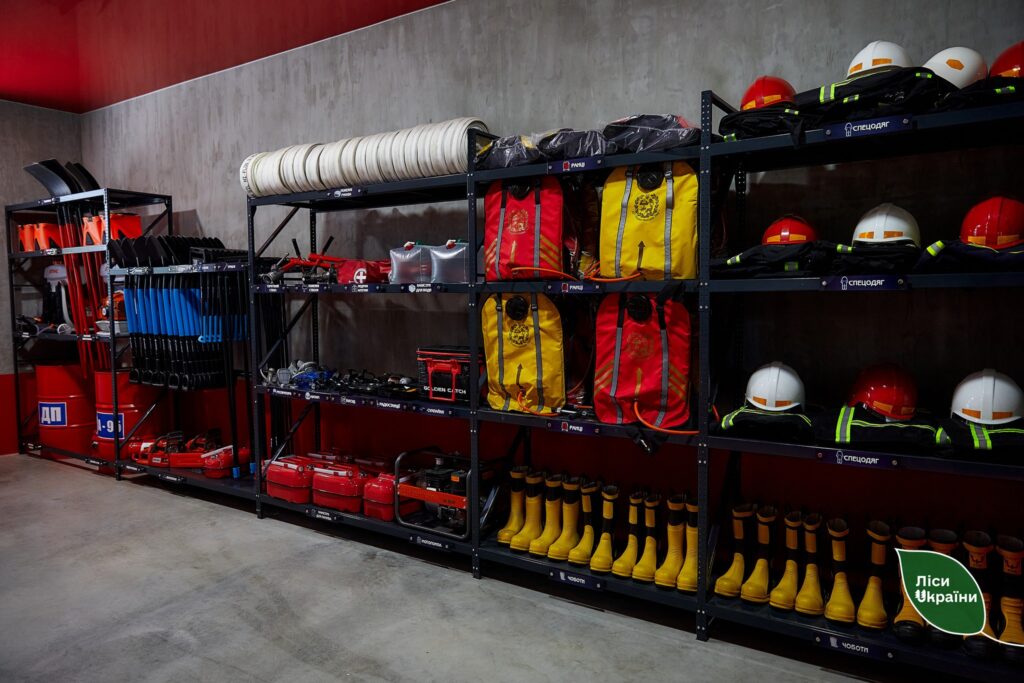
These rules also require the enterprise to maintain a state fire protection system — essentially its own units based at forest fire stations or designated points equipped with the necessary firefighting equipment.
Forest users are also required to implement preventive measures, including establishing mineralized strips, maintaining forest roads in passable condition, and creating fire water reservoirs.
The required number of firefighting equipment and resources is defined by the Resolution of the Cabinet of Ministers of Ukraine No. 612 of 20 May 2022 “On Approval of the Procedure for Forest Protection and Safeguarding.”
Based on these requirements, SFE “Forests of Ukraine” forms its plans for upgrading the material and technical base of forest fire stations and equipping relevant units.
Cooperation with the SES: why outsourcing is ineffective?
Resolution No. 612 also clarifies that the SES may be involved in firefighting only when a forest fire exceeds a “controlled situation” or there is a risk of it doing so. This may include large fire areas (over 5 hectares), rapid fire spread, difficult conditions (strong winds, heat, inaccessible terrain), lack of personnel or equipment, or threats to settlements, infrastructure, or human life.
Thus, the regulatory framework allows forest users to involve the SES in certain cases. However, this is only a right! The SES may not arrive even in large-scale forest fires, including those classified as emergencies. There are several reasons for this.
1.Long distance to the fire location
In 2017, the Cabinet of Ministers of Ukraine issued the Order “On Approval of the Strategy for Reforming the System of the State Emergency Service of Ukraine.”
As a result, the main task of the SES became responding to large-scale emergencies.
Resolution of the Cabinet of Ministers of Ukraine No. 1269 of 16 December 2020 “On the Territorial Bodies of the State Emergency Service” changed the structure of the SES in accordance with the new division of districts introduced as a result of the administrative-territorial reform.
As a result, instead of approximately 500 district units, 136 remained within the SES. The distance from some remote forest areas to the nearest district department of the SES is many dozens of kilometers. Moving firefighting equipment over such a distance takes considerable time and involves significant costs.
2.Most SES fire engines need to be renewed
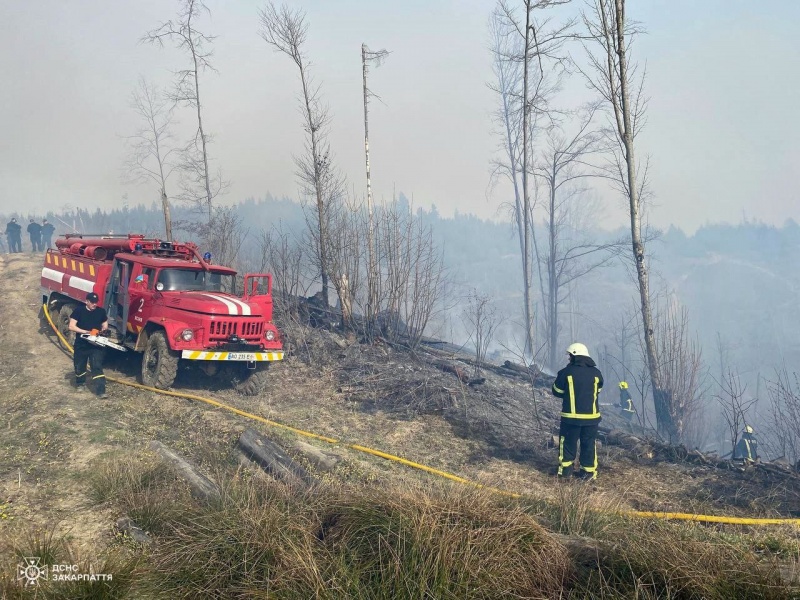
Ukrainian rescuers receive new equipment from international donors, but they often still use outdated vehicles, such as GAZ-66, ZIL-131 and Ural trucks.
These vehicles are known for their durability and ability to pass through areas where modern equipment sometimes cannot cope, especially off-road or in forests. At the same time, they are morally and technically outdated: they consume a lot of fuel, break down more often and do not develop high speed.
In real conditions, this means that fire engines move much more slowly than ordinary vehicles — on average about 35 km/h on highways, and even slower on forest roads. As a result, rescuers take longer to reach the site of a forest fire, and the area affected by the fire may increase significantly.
3.During the war, the priority of the SES is to eliminate the consequences of enemy shelling
During martial law, the priorities of the SES are regulated by the Code of Civil Protection of Ukraine, which defines the procedure for the actions of rescuers.
First of all, the SES focuses on clearing rubble after shelling, rescuing people, demining, and responding to the destruction of critical infrastructure. The SES becomes involved in extinguishing a forest fire, even if it has already reached the level of an emergency situation where the affected area exceeds 50 hectares, only when this does not interfere with the performance of its main tasks in areas exposed to combat-related risks.
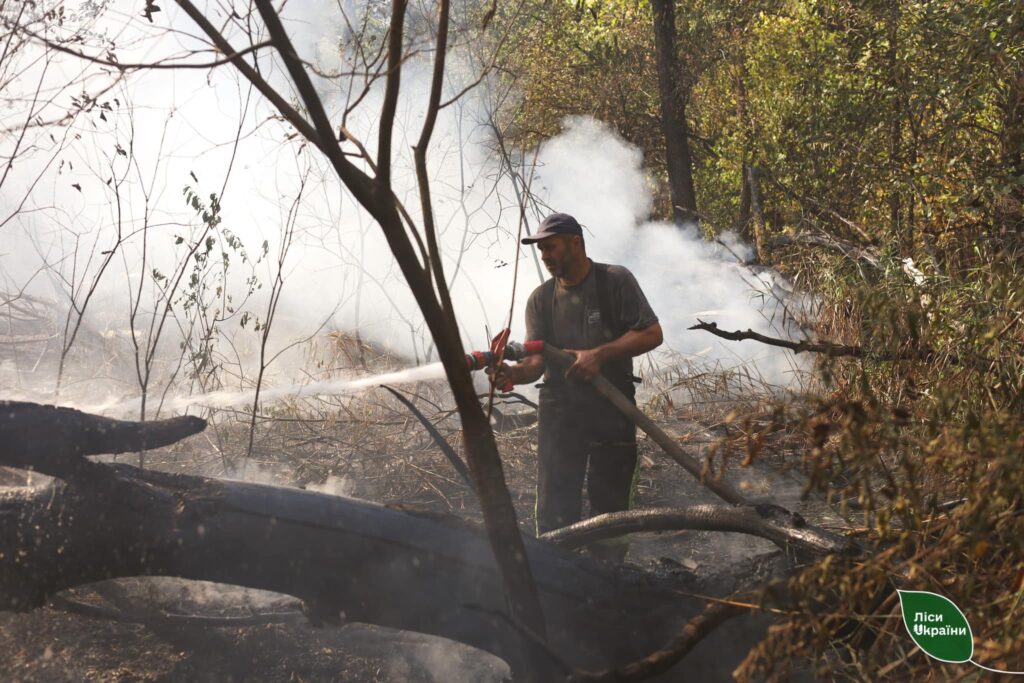
In May last year, following a hit by an enemy guided aerial bomb in the frontline Borivske Forestry Management Subunit (lisnytstvo), a forest fire broke out. Due to dry, hot weather and strong winds, it reached an area of 110 hectares within a few hours. Foresters extinguished it using their own resources in almost a day.
“If we had waited for the rescuers, according to our estimates, the forest fire would have covered more than 1000 hectares of forest,” recalls Oleksii Shapovalov, Assistant Head of the Iziumske Forestry Management Unit (nadlisnytstvo) of the branch “Slobozhanskyi Forest Office”.
4.SES outsourcing services are not designed for large forest fires and are too expensive
Resolution of the Cabinet of Ministers of Ukraine No. 1102 of 26 October 2011 “Certain Issues of the Provision of Paid Services by Units of the State Emergency Service” allows rescue units to be engaged on a paid basis.
This concerns functions that are not related to emergency response. These may include both precautionary or preventive measures, as well as the use of equipment for extinguishing or preventing fires at specific sites, for example during works in forests or at logging sites.
Theoretically, rescuers could also be engaged, for a separate fee, to extinguish a small forest fire. SFE “Forests of Ukraine” has already considered this option. However, the key question is whether it would be cheaper than making its own investments.
Example of calculating the cost of an SES response to a forest fire covering 0.03 hectares.
Responding to such a fire would require one fire engine with five rescuers, who would have to travel about 100 km in total, both ways.
The average speed of GAZ-66, ZIL-131 and Ural trucks on highways is 35 km/h. Therefore, the journey alone takes almost three hours, with another two hours needed for the actual firefighting. In total, this means almost five hours of work, 83 liters of fuel consumed, and a full tank of water. Altogether, the cost exceeds UAH 20000.
“The area affected by last year’s fires was approximately 6,000 hectares, most of which occurred in frontline areas. SES services would have cost us more than UAH 3 billion,” says Mykola Hontaruk, Deputy Director of the Department of Forestry of SFE “Forests of Ukraine.”
Local community fire units: misplaced expectations
According to the Order of the Cabinet of Ministers of Ukraine “On Approval of the Strategy for Reforming the System of the State Emergency Service of Ukraine,” firefighting functions in territorial communities should be transferred to local fire protection units and volunteer fire brigades.
However, a significant number of communities do not have the financial resources to fully maintain fire units and equipment.
During the war, financial resources are directed toward defence. Many men have been called up for service in the Armed Forces of Ukraine, and there is currently simply no one to fill positions in local fire protection units.
Formally, the requirement exists; in practice, in many communities it has not been implemented.
Investments of SFE “Forests of Ukraine” in fire safety: what is planned for this year
This year, the enterprise plans to purchase:
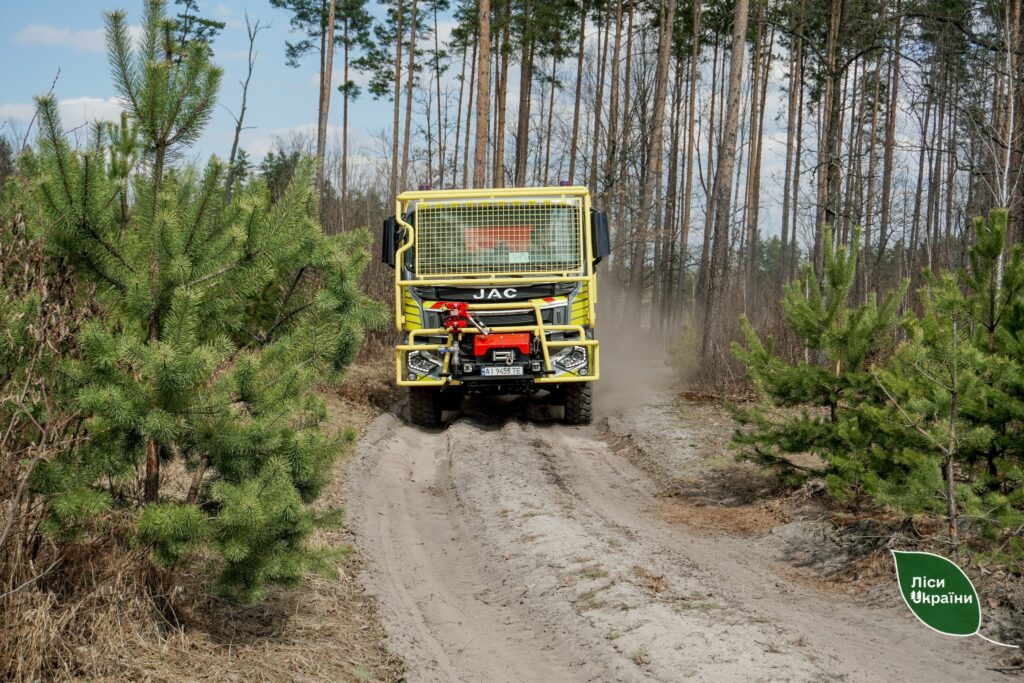
16 modern large-capacity fire engines of Ukrainian production;
2,000 fire hoses and more than 100 nozzles;
approximately 700 backpack sprayers;
dozens of forest firefighting modules.