


Developing a methodology for the conservation of indigenous ecosystems: a step toward FSC standards compliance in Ukraine
The identification, assessment, and conservation of representative areas of indigenous ecosystems (RAIE) are an integral part of the FSC standard for Ukraine.
As of August 1, 2025, under voluntary commitments, forestry enterprises or their structural divisions (management units) ensure compliance with FSC forest certification requirements across 4.726 million hectares, 96% of which are managed by subdivisions of SFE “Forests of Ukraine,” according to UkrNDILGA.
Ukrainian forestry legislation lacks provisions for the identification, assessment, and development of measures to conserve RAIE and/or restore them to a more natural state. Management units face a shortage of regulatory, methodological, and scientific tools to meet these requirements. An analysis of public certification reports from 2020–2024 audits revealed that the largest number of non-conformities related to Criterion 6.5, which is associated with RAIE (151 cases, or 10.1%).
This persistent trend points to systemic challenges in management and production activities when implementing FSC standards in Ukraine. To address these issues, SFE “Forests of Ukraine” initiated the study “Development of a Methodology for the Identification, Assessment, and Conservation of Representative Areas of Indigenous Ecosystems in Accordance with International Forest Management Standards for Ukraine,” involving scientists from UkrNDILGA.
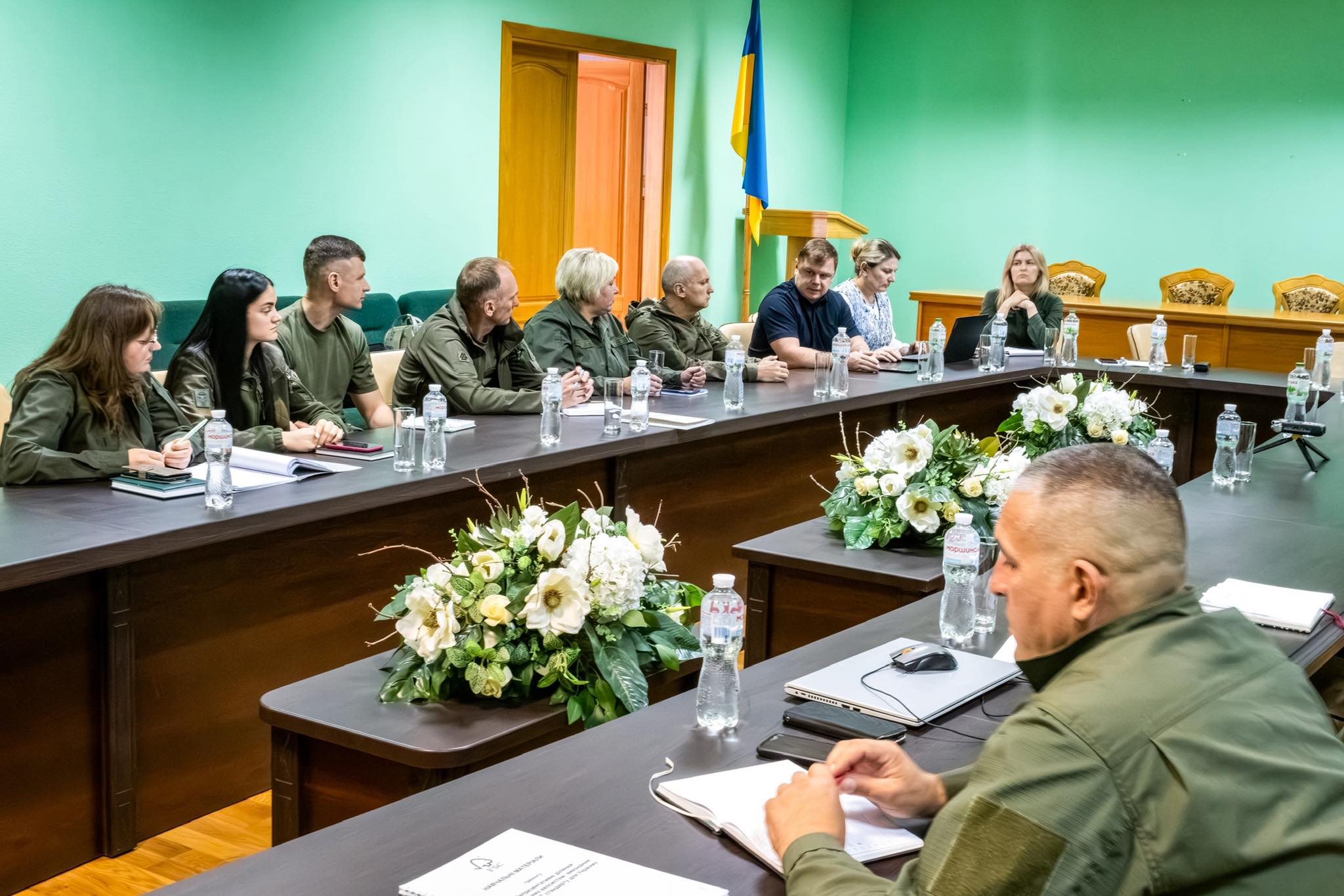
To ensure the practicality of the RAIE methodology and incorporate existing experience, a project presentation was held from August 27 to September 4 with the support of SFE “Forests of Ukraine” for responsible staff at the branches of the Stolychnyi, Poliskyi, Tsentralnyi, and Podilskyi Forest Offices. For the Karpatskyi and Slobozhanskyi Forest Offices, the presentation was held online on August 29.
During the presentation, participants learned about approaches to defining the classification unit of “indigenous ecosystem”; practical aspects of using the best available information; and methods for identifying, assessing, and prescribing conservation measures for RAIE. A step-by-step action plan, field survey forms, documentation descriptions, and logical-structural schemes were developed.
The event format encouraged practical feedback and comments on ensuring proportional representation of indigenous ecosystems during RAIE identification. Special attention was given to updating forest inventory materials, permissible cases for revising RAIE lists, and refining measures for restoring sites to a more natural state.
Opening the hearings on the RAIE methodology project, Halyna Domashovets, Head of the Forest Certification Sector at SFE “Forests of Ukraine,” emphasized that forest certification remains the “philosophy” of forest management within the enterprise. It fosters awareness of the uniqueness of RAIE, which serve as natural laboratories for observing ecological processes, mechanisms of self-regulation, conservation of rare species, and maintenance of biodiversity.
In her view, the presentation and discussion of the methodology allow the incorporation of practical aspects of working with RAIE and make it an effective tool of forestry aligned with FSC standards in Ukraine.
Pavlo Kravets, Leading Researcher at the Department of Forest Inventory, Monitoring, Certification, and Forest Management of UkrNDILGA, stressed that the developed methodology is based on extensive practical experience of certificate holders and incorporates earlier work on manuals, FSC certification guidelines, and related webinars, seminars, and trainings.
Despite the legal definition of a forest as an ecosystem, its structural-spatial characteristics in legislation and methodology focus primarily on a single element — the stand — and on evaluating parameters relevant to forest management goals. The functional relationships between forest elements that form ecosystems remain a problematic issue. To identify RAIE, the biotope was proposed as a universal classification unit.
Establishing correspondence between forest biotopes and forest types facilitates the identification of forest ecosystem biotopes. Ultimately, integrating biotope classification into forestry will help meet the requirements of numerous international agreements and conventions, particularly those concerning the conservation of flora, fauna, and natural habitats in Europe. The appendix presented in the draft methodology, which aligns forest types across Ukraine’s natural zones with biotopes, received positive feedback from forestry professionals. They highly appreciated the potential of using forest typology and inventory materials for RAIE identification.
The document sets out a detailed sequence for identifying, assessing, and prescribing conservation measures for RAIE: a preliminary office-based stage, a field stage, and a final stage. Each stage delivers specific outcomes, culminating in the formation of the final RAIE list. The preliminary stage involves analyzing readily available information such as forest inventory materials, taxonomic descriptions, the National Biotope Catalog, and scientific publications. The field stage requires examining pre-selected sites, with the aid of proposed survey forms and photo documentation guidelines, which were well received by certification staff. The final stage serves as a conclusive verification of the RAIE list’s compliance with FSC standards for Ukraine.
The assessment section of the methodology focuses on gathering information about RAIE conditions and determining the nature of conservation measures to support or enhance their functions toward a more natural state. It includes an analysis of potential threats and negative impacts at all stages of RAIE designation. Based on this, conservation measures are proposed: passive protection for well-preserved RAIE, and active protection for sites requiring restoration. The list of acceptable and unacceptable measures under active protection sparked lively discussion due to the lack of legal support for the concept of “ecosystem indigeneity” and challenges in practical implementation.
The presentation and discussion of the methodology project demonstrated high engagement from specialists, their willingness to share experience, and their readiness to provide suggestions for improvement. Certification staff committed to submitting written feedback and proposals to be considered in preparing the final version of the methodology.
These meetings confirmed the potential for effective collaboration between science and practice in addressing complex forestry issues, moving Ukrainian forestry closer to international FSC certification requirements.