


The First Year of the Supervisory Board of State Enterprise “Forests of Ukraine”
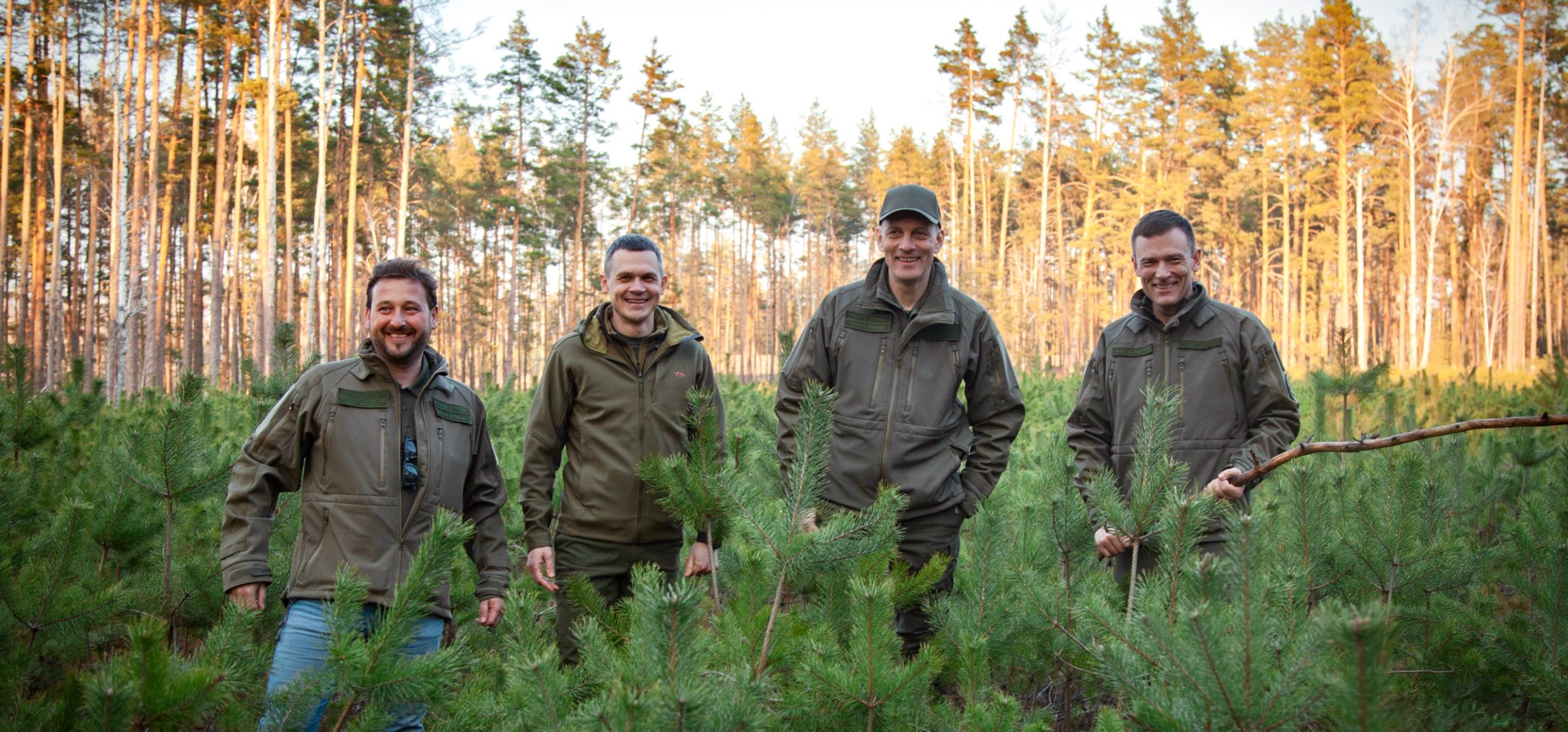
January 2026 marks one year since the Supervisory Board of State Enterprise “Forests of Ukraine” was established. NV journalists detailed how the board was formed, the challenges its members faced, their plans for this year, and why the supervisory board became a target of information attacks.

How the Supervisory Board Was Formed
On 8 March 2024, the Law of Ukraine on Improving Corporate Governance (No. 3587-IX) entered into force, requiring state-owned enterprises to introduce a two-tier governance structure with the establishment of a supervisory board.
On 30 April 2024, the Government included State Enterprise “Forests of Ukraine” in the list of entities of critical importance to the economy, for which the appointment of chief executives and members of supervisory boards is carried out with the participation of the Appointments Committee.
On 10 May 2024, State Forest Resources Agency of Ukraine approved the Regulation on the Supervisory Board of State Enterprise “Forests of Ukraine”.
In August 2024, Appointments Committee approved the qualification requirements for independent candidates to the Supervisory Board of State Enterprise “Forests of Ukraine” and announced an open competitive selection process.
Members were selected based on the principle of collective suitability, meaning that the Board as a whole must possess a combination of experience and competencies sufficient to ensure effective governance and oversight.
Important: Appointments Committee is composed of representatives of the Cabinet of Ministers (ministers and a state secretary) as well as independent members, including representatives of the IFC and the EBRD. Accordingly, State Enterprise “Forests of Ukraine” had no influence whatsoever over the formation of the Supervisory Board.
In January 2025, the Cabinet of Ministers approved the winners of the selection process as members of the Supervisory Board — Markiyan Vytvytskyy, Roberts Stripnieks, and Janne Harjunpää as independent members, and Oleksii Kucher as the state representative.

Is a four-member Supervisory Board sufficient?
In the initial version of the Regulation on the Supervisory Board of State Enterprise “Forests of Ukraine”, a member of the Supervisory Board was deemed appointed and the Supervisory Board considered duly constituted only upon the election of its full statutory composition. However, even before the Supervisory Board members signed their contracts and before the Board held its first meeting, this provision was removed by State Forest Resources Agency of Ukraine.
As stated in the above-mentioned Law of Ukraine No. 3587-IX, a supervisory board is not quorate and may not take decisions if the number of its members is equal to or less than one half of its prescribed composition. Accordingly, even with only three out of five members in office, the Supervisory Board of State Enterprise “Forests of Ukraine” is legally quorate.
Cabinet of Ministers Resolution No. 142 of 10 March 2017 further provides that independent members must constitute a majority of the Supervisory Board; a meeting of the Supervisory Board is quorate if more than half of its members are present; and decisions of the Supervisory Board are adopted by a simple majority of the votes of the members participating in the meeting and entitled to vote.
The formation and all subsequent activities of the Supervisory Board of State Enterprise “Forests of Ukraine” fully comply with all of the above requirements.
How is the remuneration of Supervisory Board members determined?
The remuneration paid to independent members of the Supervisory Board is determined in accordance with the Law of Ukraine “On the Management of State-Owned Property” and the resolutions of the Cabinet of Ministers of Ukraine dated 3 September 2008 No. 777, 10 March 2017 No. 142, 10 March 2017 No. 143, 29 November 2024 No. 1369, and 4 July 2017 No. 668.
A civil-law contract has been concluded between the enterprise and each member of the Supervisory Board, the terms of which have been approved by an order of the State Forest Resources Agency of Ukraine.
The level of remuneration of the Supervisory Board members of State Enterprise “Forests of Ukraine” is aligned with that of other state-owned companies with comparable annual revenues.
How the Supervisory Board strengthened oversight of business processes
The Supervisory Board adopted a series of decisions aimed at conducting a comprehensive review of the enterprise.
In particular, it initiated independent external audits for the financial years 2022–2024 and 2025.
Formal requests were submitted to the Antimonopoly Committee of Ukraine to review public procurement procedures for indications of violations of competition law.
A request was also sent to State Audit Service of Ukraine to initiate a review of the 2025 public procurement of State Enterprise “Forests of Ukraine”, focusing on compliance with legal requirements, justification of expected values, lawfulness of the selected procurement procedures, and efficiency of the use of funds.
Petitions were filed with all law enforcement authorities (the National Police, the State Bureau of Investigation, the Bureau of Economic Security, the National Anti-Corruption Bureau of Ukraine, and the Office of the Prosecutor General) concerning criminal proceedings involving the top management of State Enterprise “Forests of Ukraine”.
An HR audit was initiated, providing for an independent and comprehensive assessment of the company’s top management in terms of professional competence, effectiveness, and business ethics.
The Supervisory Board approved the establishment of an Internal Control Service reporting directly to the Supervisory Board, comprising internal audit, compliance (monitoring compliance with laws, regulations, and internal policies), and risk management functions.
The Supervisory Board also required State Enterprise “Forests of Ukraine” to submit, on a monthly basis by the 10th day of each month, information on the implementation of the annual investment plan, production of forest management materials, the status of registration of property rights to land plots, the progress of the corporatization process, key performance indicators, the register of HR-related orders, contracts exceeding UAH 1 million, and other relevant data.

Adopted and approved documents
The Anti-Corruption Policy and the Code of Business Ethics of the enterprise were approved. These documents were developed jointly with the Basel Institute on Governance in line with international best practices.
Interim reports on the execution of the financial plan and on the achievement of performance targets were approved, and the CEO’s report was reviewed and taken note of.
The quarterly action plan for achieving the performance targets set out in the 2026 Letter of Expectations was approved.
The Enterprise Development Strategy through 2030 was adopted.
Among other matters, the Supervisory Board considered such key issues as the implementation of an automated ERP management system and an innovative forest demining concept involving specially developed equipment.
Overall, during the year the Supervisory Board held 10 formal meetings and more than 30 working meetings and briefings. Three committees were established, which held nine meetings. The Office of the Corporate Secretary was also created.
An analysis of the full volume of decisions and initiatives undertaken shows that the Supervisory Board of State Enterprise “Forests of Ukraine” has proven to be one of the most proactive and productive supervisory boards in Ukraine’s public sector.
The Supervisory Board and the management of State Enterprise “Forests of Ukraine”
In 2025, State Enterprise “Forests of Ukraine” went through a period of turbulence, during which the Supervisory Board had to determine who should remain at the helm of the company.
Referrals to law enforcement authorities did not provide sufficient grounds for replacing the CEO. At the same time, improving financial and operational indicators demonstrated the effectiveness of the company’s management and the soundness of the chosen strategy.
Accordingly, key staffing decisions were deferred pending the completion of multiple audits, inspections, and comprehensive independent assessments.

Information attacks against the Supervisory Board
Prior to the 2022 forestry reform, the state forestry sector was, in effect, financially dependent on the state. By contrast, last year State Enterprise “Forests of Ukraine” generated a profit of UAH 8 billion (approximately EUR 180 million). It is therefore hardly surprising that the shadow economy is attempting to regain lost cash flows, having spent almost three years discrediting the reform and exerting constant pressure on State Enterprise “Forests of Ukraine”, State Forest Resources Agency of Ukraine, and the Cabinet of Ministers.
It is thus entirely expected that the Supervisory Board of State Enterprise “Forests of Ukraine”, as one of the key elements of sector governance, has also become a target of coordinated attacks. These attempts at discreditation follow the same pattern, use the same channels, and involve the same individuals.
The key narratives promoted by opponents are that “the Supervisory Board is illegitimate” and that “its remuneration is unlawful”. However, as explained above, these claims have no legal basis. The initial draft regulation issued by State Forest Resources Agency of Ukraine — which the authors of complaints to law enforcement agencies rely upon — was amended in due time and explicitly allows the Supervisory Board to operate with a reduced number of members.
“The Supervisory Board maintains an open, professional and impartial position in the interests of the state. Attempts to exert pressure in order to pull us to one side or another are futile,” said Oleksii Kucher.

Plans for 2026: digitalization, increased harvesting, and oversight of record profits
State Enterprise “Forests of Ukraine” closed 2025 with record-high financial and economic results, and it is already clear that growth will continue. Demand for timber and market prices remain at exceptionally high levels. According to Oleksii Kucher, the Supervisory Board’s key priority is to ensure strict control over the use of windfall profits. These funds must either be reinvested in the company’s development in line with the Strategic Plan or transferred to the state budget. At the same time, “Forests of Ukraine” must not rest on its laurels but continue to expand harvesting volumes and the supply of timber to the market.
As noted by Markiyan Vytvytskyy, it is absolutely essential this year to relaunch the implementation of the Enterprise Resource Planning (ERP) system, which will significantly enhance the efficiency and transparency of all business processes.
Roberts Stripnieks also highlighted the importance of a redesigned strategic planning process that ensures meaningful involvement of key stakeholders at the planning stage, a clear focus of investment policies during implementation, and more structured and transparent reporting throughout the strategic review cycle.
According to Janne Harjunpää, the corporatization process and the strategic issue of forest demining will remain at the core of the Supervisory Board’s agenda. At the same time, the Board sees continuous improvements in operational efficiency, governance standards, and transparency as a key foundation for positioning “Forests of Ukraine” as an attractive partner for international industrial operators and long-term investors.