


Category: Без категорії
The government’s Made in Ukraine policy, led by Yuliia Svyrydenko, comprises around fifteen programs aimed at developing Ukrainian producers. In 2025, 72,000 Ukrainian enterprises benefited from state support.
“Forests of Ukraine” is ready to contribute to supporting domestic production.
We propose increasing the investment plan of SE “Forests of Ukraine” for 2026 to UAH 4.1 billion. Of this amount, UAH 2.1 billion is for goods and services that can be supplied by Ukrainian manufacturers. This was announced today by the company’s head, Yurii Bolokhovets.
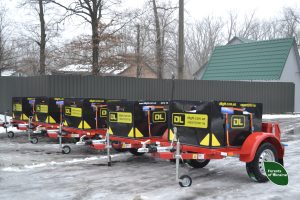
We will start with the procurement of firefighting equipment. UAH 380 million, or 95% of the planned funds, can remain within the Ukrainian economy. Ukraine produces almost everything needed for fire prevention and response — from large fire engines and modules, video monitoring towers to water tanks, ploughs for mineralized firebreaks, and protective clothing.
Investments in reforestation equipment amount to UAH 80 million. Most of the required tools (disc harrows, mulchers, seeders, etc.) can be supplied by Ukrainian manufacturers.
Unfortunately, modern logging machinery (harvesters, forwarders, skidders, etc.) is not manufactured in Ukraine. We plan to deliver this equipment directly, without intermediaries, from manufacturing plants in European countries. At the same time, we are ready to purchase Ukrainian-made trailers and semi-trailers, as well as low-bed trailers for transporting special equipment, totaling over UAH 100 million.
More than UAH 621 million has been allocated this year for the construction of forest roads. Roads mean increased harvesting volumes, improved fire prevention, and reduced logistics costs. The work is carried out either by the enterprise’s own teams or by Ukrainian contractors using local (!) materials — crushed stone, gravel-sand mixtures, cement, and more. All of this is Ukrainian production!
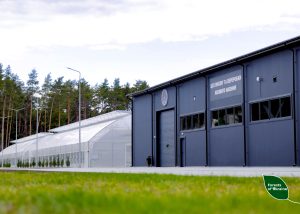
An important area of the company’s development is the expansion of a network of modern forest seed centers, which enable the production of world-class seedlings and significantly improve the efficiency of reforestation efforts. The investment volume is UAH 270 million, of which 90% comprises goods and services offered by Ukrainian manufacturers.
Next month, the Procurement Department of SE “Forests of Ukraine” plans to hold a Supplier Day, presenting the company’s investment programs and planned procurements for 2026–2027 to the business community. We expect feedback on technical specifications, potential “barriers,” and the level of competition.
Our goal is maximum transparency, openness, and predictability in procurement, strengthening trust in public procurement, ensuring equal competitive conditions, and expanding the pool of potential participants.
Clearing these areas using methods applied to agricultural land is not feasible. Manual demining would take decades and require tens of billions in funding.
Janne Harjunpää, a member of the Supervisory Board of SE «Forests of Ukraine» and Chair of the Audit Committee, proposes an innovative approach to addressing this challenge.
The approach involves the use of remote-controlled harvesters to carry out forestry operations in damaged and hazardous areas, preparing the land for subsequent mechanical demining and the restoration of forest stands. The outcome would be the creation of healthy and safe forests.
Applying this approach would make it possible to clear significant areas within a few years. Otherwise, mined forests will remain a constant threat to local communities and a source of large-scale forest fires.
A coordination meeting was held at Forests of Ukraine with the participation of representatives of the State Emergency Service and the State Forest Resources Agency of Ukraine to discuss a roadmap for implementing a pilot project.
Key issues included the development of a regulatory framework that would allow forestry operations in mined areas using specialized equipment, as well as the attraction of grant funding and the adaptation of harvesting machinery.
According to Janne Harjunpää, the project has strong potential for support from international donors. Global manufacturers are ready to assist with adapting the equipment, and there is support from the relevant ministry regarding the regulatory framework.
Importantly, this approach goes beyond demining alone. It represents a comprehensive solution that combines safety, cost efficiency, risk reduction, and economic value creation through the safe use of forest resources and the long-term restoration of forests. As a result, Ukraine has an opportunity to implement a project unprecedented in global practice.
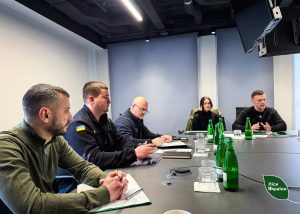
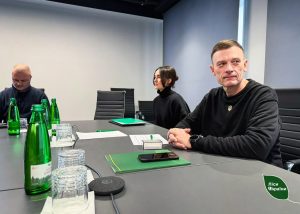

We have received the financial results of SE “Forests of Ukraine” for 2025, which allow the company’s performance to be assessed on the basis of objective figures rather than subjective judgments.
As forecast, revenue reached UAH 29.9 billion, profit before tax amounted to UAH 8.4 billion, and profitability stood at 23% – several times (!) higher than in previous years. A total of UAH 15.8 billion in taxes was paid: 44% of all revenues were transferred to the state budget, the highest share in the forestry and wood-processing sector.
For perhaps the first time since independence, billions in profits from timber sales have not been dissipated through shadow schemes or divided among officials and intermediaries, but have been fully directed to the budget. This is an indisputable fact, as figures do not lie.
The growth in performance is largely the result of de-shadowing. Never before has the timber sales system in the forestry sector been so transparent. SE “Forests of Ukraine” now publicly discloses information on every (!) exchange transaction: who contracted what volume of timber and at what price. Lists of rejected contracts are also published. We are not aware of any European country with such a level of transparency.
However, the potential has not yet been exhausted – there is every chance to continue growth in 2026. We are determined to offer the market the largest volume of forest products since the start of the full-scale war.
We expect an additional one million cubic meters due to the acceleration of forest management planning approvals. Positive changes are already being felt. Another one million cubic meters is expected as a result of deregulating permitting procedures. Amendments to the regulatory framework are being prepared, but the necessary decisions have unfortunately not yet been adopted.
From a technical standpoint, the enterprise is ready to increase harvesting volumes. A process has begun to procure an unprecedented amount of specialized equipment: harvesters, forwarders, skidders, tractors, trailers, and timber transportation equipment. We are working to at least double this year’s investment plan in order to significantly accelerate harvesting operations.
Last year, the company moved 100% of harvesting service procurements to the Prozorro system. However, due to a shortage of personnel, contractors often fail to complete work on time. Therefore, across Ukraine we are forming additional in-house crews and opening hundreds of new vacancies.
At the same time, we never forget: if you take from the forest, you must invest in it. That is why no less significant investments this year are being directed toward forest protection, conservation, and reforestation.
What the enterprise inherited from former forestry units was mostly obsolete equipment – hundreds of fire stations filled with outdated scrap metal. In the south, almost nothing remained at all. We have succeeded in fully equipping all forest fire stations of SE “Forests of Ukraine” with modern tools and equipment: from protective clothing, backpack fire extinguishers, and communications equipment to mobile fire-fighting modules.
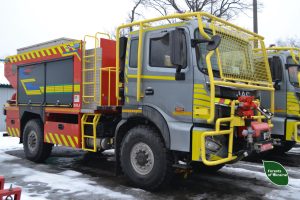
Last year, for the first time, we began purchasing modern large-scale fire-fighting vehicles that had not been renewed since Soviet times. The first nine vehicles have already been delivered, with another nine planned in the near future.
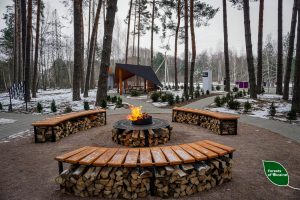
Since 2023, in the most fire-prone locations, the enterprise has created 150 (!) modern recreational sites for safe public use. In 2026, we plan to establish 50 more. This recreation program has saved the state thousands of hectares of forest. The experience of SE “Forests of Ukraine” is being adopted by foresters in other European countries, where most forest fires are also caused by human factors.
Last year, foresters completed the “Green Country” program, but the creation of new forests and the preservation of naturally regenerated forests remain our priority. Even greater attention will be paid to the care of forest plantations – this is how we will ensure the supply of high-quality commercial timber in the future.
Everything we are already doing and planning to do is aimed at maximizing the capitalization of the forestry sector. This means healthy and protected forests, modern infrastructure, an upgraded material and technical base, efficient business processes, and a professional team.
A state forestry company with a market value of billions of euros? Yes, this is realistic. We are moving in this direction. Last year, a reorganization was carried out, the organizational structure and administrative apparatus were optimized, and we are consistently disposing of non-core assets. The last schemes through which illegal timber could systematically enter the market have been shut down.
This year, we are relaunching the implementation of an ERP system – no modern company can function without an automated management system.
We are continuing the corporatization process, which includes asset revaluation, inventory, and the preparation of transfer deeds. Registration of property rights to land is being finalized.
Last year, de-occupied forestry enterprises in Kharkiv, Donetsk, and Kherson regions joined SE “Forests of Ukraine.” Restoration, harvesting, and forest protection activities have begun. The area affected by fires has decreased several-fold. At the same time, not only frontline forestry enterprises require support. We are working on integrating other forest users that are unable to fully perform their functions.
The year has started very actively. Despite snowfall and frost, harvesting dynamics are higher than last year. Equipment is operating, forest roads are cleared, and warehouses are shipping products.
We feel a great responsibility: while other businesses are forced to stop, we continue to operate and grow, compensating for budget losses.
We are only awaiting long-planned legislative and regulatory decisions aimed at unlocking the full potential of the forestry sector.
Yurii Bolokhovets
Head of SE “Forests of Ukraine”
January 2026 marks one year since the Supervisory Board of State Enterprise “Forests of Ukraine” was established. NV journalists detailed how the board was formed, the challenges its members faced, their plans for this year, and why the supervisory board became a target of information attacks.

How the Supervisory Board Was Formed
On 8 March 2024, the Law of Ukraine on Improving Corporate Governance (No. 3587-IX) entered into force, requiring state-owned enterprises to introduce a two-tier governance structure with the establishment of a supervisory board.
On 30 April 2024, the Government included State Enterprise “Forests of Ukraine” in the list of entities of critical importance to the economy, for which the appointment of chief executives and members of supervisory boards is carried out with the participation of the Appointments Committee.
On 10 May 2024, State Forest Resources Agency of Ukraine approved the Regulation on the Supervisory Board of State Enterprise “Forests of Ukraine”.
In August 2024, Appointments Committee approved the qualification requirements for independent candidates to the Supervisory Board of State Enterprise “Forests of Ukraine” and announced an open competitive selection process.
Members were selected based on the principle of collective suitability, meaning that the Board as a whole must possess a combination of experience and competencies sufficient to ensure effective governance and oversight.
Important: Appointments Committee is composed of representatives of the Cabinet of Ministers (ministers and a state secretary) as well as independent members, including representatives of the IFC and the EBRD. Accordingly, State Enterprise “Forests of Ukraine” had no influence whatsoever over the formation of the Supervisory Board.
In January 2025, the Cabinet of Ministers approved the winners of the selection process as members of the Supervisory Board — Markiyan Vytvytskyy, Roberts Stripnieks, and Janne Harjunpää as independent members, and Oleksii Kucher as the state representative.

Is a four-member Supervisory Board sufficient?
In the initial version of the Regulation on the Supervisory Board of State Enterprise “Forests of Ukraine”, a member of the Supervisory Board was deemed appointed and the Supervisory Board considered duly constituted only upon the election of its full statutory composition. However, even before the Supervisory Board members signed their contracts and before the Board held its first meeting, this provision was removed by State Forest Resources Agency of Ukraine.
As stated in the above-mentioned Law of Ukraine No. 3587-IX, a supervisory board is not quorate and may not take decisions if the number of its members is equal to or less than one half of its prescribed composition. Accordingly, even with only three out of five members in office, the Supervisory Board of State Enterprise “Forests of Ukraine” is legally quorate.
Cabinet of Ministers Resolution No. 142 of 10 March 2017 further provides that independent members must constitute a majority of the Supervisory Board; a meeting of the Supervisory Board is quorate if more than half of its members are present; and decisions of the Supervisory Board are adopted by a simple majority of the votes of the members participating in the meeting and entitled to vote.
The formation and all subsequent activities of the Supervisory Board of State Enterprise “Forests of Ukraine” fully comply with all of the above requirements.
How is the remuneration of Supervisory Board members determined?
The remuneration paid to independent members of the Supervisory Board is determined in accordance with the Law of Ukraine “On the Management of State-Owned Property” and the resolutions of the Cabinet of Ministers of Ukraine dated 3 September 2008 No. 777, 10 March 2017 No. 142, 10 March 2017 No. 143, 29 November 2024 No. 1369, and 4 July 2017 No. 668.
A civil-law contract has been concluded between the enterprise and each member of the Supervisory Board, the terms of which have been approved by an order of the State Forest Resources Agency of Ukraine.
The level of remuneration of the Supervisory Board members of State Enterprise “Forests of Ukraine” is aligned with that of other state-owned companies with comparable annual revenues.
How the Supervisory Board strengthened oversight of business processes
The Supervisory Board adopted a series of decisions aimed at conducting a comprehensive review of the enterprise.
In particular, it initiated independent external audits for the financial years 2022–2024 and 2025.
Formal requests were submitted to the Antimonopoly Committee of Ukraine to review public procurement procedures for indications of violations of competition law.
A request was also sent to State Audit Service of Ukraine to initiate a review of the 2025 public procurement of State Enterprise “Forests of Ukraine”, focusing on compliance with legal requirements, justification of expected values, lawfulness of the selected procurement procedures, and efficiency of the use of funds.
Petitions were filed with all law enforcement authorities (the National Police, the State Bureau of Investigation, the Bureau of Economic Security, the National Anti-Corruption Bureau of Ukraine, and the Office of the Prosecutor General) concerning criminal proceedings involving the top management of State Enterprise “Forests of Ukraine”.
An HR audit was initiated, providing for an independent and comprehensive assessment of the company’s top management in terms of professional competence, effectiveness, and business ethics.
The Supervisory Board approved the establishment of an Internal Control Service reporting directly to the Supervisory Board, comprising internal audit, compliance (monitoring compliance with laws, regulations, and internal policies), and risk management functions.
The Supervisory Board also required State Enterprise “Forests of Ukraine” to submit, on a monthly basis by the 10th day of each month, information on the implementation of the annual investment plan, production of forest management materials, the status of registration of property rights to land plots, the progress of the corporatization process, key performance indicators, the register of HR-related orders, contracts exceeding UAH 1 million, and other relevant data.

Adopted and approved documents
The Anti-Corruption Policy and the Code of Business Ethics of the enterprise were approved. These documents were developed jointly with the Basel Institute on Governance in line with international best practices.
Interim reports on the execution of the financial plan and on the achievement of performance targets were approved, and the CEO’s report was reviewed and taken note of.
The quarterly action plan for achieving the performance targets set out in the 2026 Letter of Expectations was approved.
The Enterprise Development Strategy through 2030 was adopted.
Among other matters, the Supervisory Board considered such key issues as the implementation of an automated ERP management system and an innovative forest demining concept involving specially developed equipment.
Overall, during the year the Supervisory Board held 10 formal meetings and more than 30 working meetings and briefings. Three committees were established, which held nine meetings. The Office of the Corporate Secretary was also created.
An analysis of the full volume of decisions and initiatives undertaken shows that the Supervisory Board of State Enterprise “Forests of Ukraine” has proven to be one of the most proactive and productive supervisory boards in Ukraine’s public sector.
The Supervisory Board and the management of State Enterprise “Forests of Ukraine”
In 2025, State Enterprise “Forests of Ukraine” went through a period of turbulence, during which the Supervisory Board had to determine who should remain at the helm of the company.
Referrals to law enforcement authorities did not provide sufficient grounds for replacing the CEO. At the same time, improving financial and operational indicators demonstrated the effectiveness of the company’s management and the soundness of the chosen strategy.
Accordingly, key staffing decisions were deferred pending the completion of multiple audits, inspections, and comprehensive independent assessments.

Information attacks against the Supervisory Board
Prior to the 2022 forestry reform, the state forestry sector was, in effect, financially dependent on the state. By contrast, last year State Enterprise “Forests of Ukraine” generated a profit of UAH 8 billion (approximately EUR 180 million). It is therefore hardly surprising that the shadow economy is attempting to regain lost cash flows, having spent almost three years discrediting the reform and exerting constant pressure on State Enterprise “Forests of Ukraine”, State Forest Resources Agency of Ukraine, and the Cabinet of Ministers.
It is thus entirely expected that the Supervisory Board of State Enterprise “Forests of Ukraine”, as one of the key elements of sector governance, has also become a target of coordinated attacks. These attempts at discreditation follow the same pattern, use the same channels, and involve the same individuals.
The key narratives promoted by opponents are that “the Supervisory Board is illegitimate” and that “its remuneration is unlawful”. However, as explained above, these claims have no legal basis. The initial draft regulation issued by State Forest Resources Agency of Ukraine — which the authors of complaints to law enforcement agencies rely upon — was amended in due time and explicitly allows the Supervisory Board to operate with a reduced number of members.
“The Supervisory Board maintains an open, professional and impartial position in the interests of the state. Attempts to exert pressure in order to pull us to one side or another are futile,” said Oleksii Kucher.

Plans for 2026: digitalization, increased harvesting, and oversight of record profits
State Enterprise “Forests of Ukraine” closed 2025 with record-high financial and economic results, and it is already clear that growth will continue. Demand for timber and market prices remain at exceptionally high levels. According to Oleksii Kucher, the Supervisory Board’s key priority is to ensure strict control over the use of windfall profits. These funds must either be reinvested in the company’s development in line with the Strategic Plan or transferred to the state budget. At the same time, “Forests of Ukraine” must not rest on its laurels but continue to expand harvesting volumes and the supply of timber to the market.
As noted by Markiyan Vytvytskyy, it is absolutely essential this year to relaunch the implementation of the Enterprise Resource Planning (ERP) system, which will significantly enhance the efficiency and transparency of all business processes.
Roberts Stripnieks also highlighted the importance of a redesigned strategic planning process that ensures meaningful involvement of key stakeholders at the planning stage, a clear focus of investment policies during implementation, and more structured and transparent reporting throughout the strategic review cycle.
According to Janne Harjunpää, the corporatization process and the strategic issue of forest demining will remain at the core of the Supervisory Board’s agenda. At the same time, the Board sees continuous improvements in operational efficiency, governance standards, and transparency as a key foundation for positioning “Forests of Ukraine” as an attractive partner for international industrial operators and long-term investors.
State Enterprise “Forests of Ukraine” has signed an agreement for the delivery of 11 skidders. This new machinery will be deployed in the forestries of the Carpathian Forest Office branch, where timber harvesting takes place in the challenging conditions of high-altitude terrain.
This year, Slovak-made skidders will be delivered to the following forestry management units: Brusturyanske, Brodivske, Rakhivske, Uzhhorodske, Bolekhivske, Nadvirnyanske, Kolomyiske, Ivano-Frankivske, Vyhodske, Osmolodske, and Verkhovynske.
This marks the enterprise’s first-ever procurement of specialized machinery of this caliber.
A skidder is a specialized forestry vehicle used to transport felled trees from the cutting site to a landing area (upper warehouse).
The Carpathian Forest Office currently operates 350 tractors for timber skidding. However, 285 of these are largely obsolete machines manufactured in the 1980s and 90s. They require constant repair as their service life has long expired. Spare parts for these models are scarce – they are either unavailable or must be imported from distant countries at high costs.
Furthermore, most existing skidding equipment consists of repurposed agricultural tractors. They have limited power for high-altitude operations, capable of transporting only 2–3 cubic meters of wood per trip. This leads to longer harvesting timelines and significantly higher fuel consumption.
Key Advantages of the New Skidders:
Superior Maneuverability and Off-road Performance: Featuring reinforced frames, all-wheel drive, high ground clearance, and powerful engines, these skidders ensure efficient and safe operation in trackless, marshy, rocky, and mountainous areas. Most modern skidders are equipped with articulated frames, which greatly improve maneuverability in dense stands.
Increased Operational Efficiency: The winches on these skidders far outperform the mounted winches on conventional tractors. They provide greater tractive effort, faster log retrieval, and a more robust frame attachment to minimize breakdowns. Many are dual-drum models, doubling productivity. A single skidder can transport up to 12 cubic meters of timber per trip, drastically accelerating harvesting operations and reducing fuel costs.
Operator Safety and Comfort: Modern skidder winches are equipped with remote control systems and smooth speed adjustment for safer operations.
The new skidders will not require significant maintenance costs and will provide stable performance from day one.
Moving forward, we plan to procure additional batches of this equipment, replacing outdated machinery with modern, reliable units that meet the actual demands of forest operations.
On the results with which the state forestry sector is concluding this year, and the changes awaiting SFE “Forests of Ukraine” in 2026, Oleksii Kucher, Chairman of the Supervisory Board of the state-owned enterprise, told RBC-Ukraine.
Next year, the country’s largest state-owned enterprise, SFE “Forests of Ukraine,” is set to be transformed into a state-owned joint-stock company.
The transformation process began back in February, when the Cabinet of Ministers established an independent corporate governance body for the company — the Supervisory Board of SFE “Forests of Ukraine.”
The Supervisory Board includes three independent members from Canada, Finland, and Latvia — Markiyan Vytvytskyi, Janne Harjunpää, and Roberts Stripnieks — as well as a state representative, Oleksii Kucher, Head of the State Regulatory Service, who was subsequently elected Chairman of the Board.
We asked Mr. Kucher about the results with which SFE “Forests of Ukraine” is concluding the year and about the plans going forward.
— Mr. Kucher, at the most recent meeting the Supervisory Board approved the interim report on the achievement of the operational objectives of SFE “Forests of Ukraine,” as well as the report on the implementation of the financial plan based on the results of the first three quarters. In other words, are you satisfied with the company’s performance?
— We cannot but be satisfied with the financial indicators. The financial result has exceeded our expectations. The profit of SFE “Forests of Ukraine” may reach UAH 8 billion — more than double the figure recorded last year. Profitability has also increased by more than twofold, to nearly 30%.
Based on the results of the first 11 months, the enterprise has paid nearly UAH 15 billion to budgets at all levels. In my view, in terms of the growth rate of its financial and economic indicators, SFE “Forests of Ukraine” is among the leaders of the state sector of the economy.
— But is the reason behind this the increase in timber prices?
— To a large extent, yes. However, this is not an administrative increase in tariffs. All products, except for firewood for households and the social sector, are sold by SFE “Forests of Ukraine” exclusively through open, transparent, and competitive auctions.
The enterprise has not only adhered to this principle but has taken a further step toward openness by beginning to publish information on all contracts concluded on the exchange. Anyone can verify who contracted which products and at what price.
— Consumers, that is, businesses, are far from pleased with rising prices and are calling for an increase in timber supply.
— Let me remind you that for two years foresters have been urging changes to the legislation and regulatory framework that complicate permitting procedures, restrict harvesting, and lead to the loss of valuable resources. The Supervisory Board has also sought to draw the attention of the authorities to this existing problem. Finally, over the past six months, the necessary decisions have begun to be adopted.
We see that the Government and the Ministry of Economy are paying significant attention to the development of the forestry sector and to ensuring the operation of the wood-processing industry. Incidentally, we invited Minister Oleksii Soboliev to take part in a meeting of the Supervisory Board. This is something that has never happened before.
However, it must be understood that it is impossible to increase harvesting simultaneously, as any deployment of logging crews to a felling site is preceded by a lengthy bureaucratic permitting procedure. In addition, more than 2 million hectares of forests in Ukraine are objectively inaccessible for economic activity — due to temporary occupation, landmines, their location in areas where military units are deployed, and similar factors.
— Be that as it may, foresters now have more funds — how is their use being monitored?
— Let me clarify: first and foremost, it is the state that has benefited from the increase in timber prices. More than half of the proceeds from its sale are directed, in the form of taxes and fees, to budgets at all levels. At the same time, the forestry sector itself has also received additional financial resources.
Within the scope of its mandate, the Supervisory Board is making every effort to ensure oversight of how these funds are used. In particular, we have introduced the following control mechanism: the management of SFE “Forests of Ukraine” must, on a monthly basis and no later than the 10th day of each month, submit to the Supervisory Board information on expenditure contracts with a value exceeding UAH 1 million.
In addition, we receive data across all key areas — the implementation of the annual investment plan, the preparation of forest management documentation, the status of the registration of property rights, and data from the register of personnel-related orders. In other words, we maintain constant oversight and keep a close watch on developments.
Back in May, we approved the allocation of UAH 500 million to increase wages for production personnel — foresters, assistant foresters, forest rangers, drivers, tractor operators, and loggers.
The average salary at the enterprise rose from UAH 22,000 to UAH 29,000. This made it possible to halt staff outflows. At the same time, the Supervisory Board decided not to award quarterly bonuses to the Director General until the end of martial law. It is worth noting that this was the DG’s personal initiative, which the Supervisory Board supported.
The Supervisory Board seeks not only to analyse the information provided to it, but also considers it essential to have its own independent instruments for collecting and systematising such information.
For this reason, the Supervisory Board has decided to establish an Internal Control Service (ICS), comprising the internal audit, compliance (oversight of compliance with laws, regulations, and internal policies), and risk management units. The ICS staff is appointed by and reports directly to the Supervisory Board. These are our “eyes,” which, I hope, will allow us to objectively assess all processes within the enterprise. A new Head of Internal Audit has already been appointed.
— In one of your interviews, you mentioned that the Supervisory Board had put forward an initiative to conduct an independent external audit. What is the status of that initiative?
— The tenders have been completed and the contractors selected. LLC “Crowe Erfolg Ukraine” will conduct the audit of the financial statements for 2025, while LLC “Grant Thornton Legis” will audit the period from 2022 to 2024. Grant Thornton Ukraine is part of the global Grant Thornton network, which is represented in more than 150 countries worldwide. The total revenue of the global network amounted to USD 8 billion in 2024. Crowe Erfolg Ukraine is a member of Crowe Global, the world’s ninth-largest international audit network. In Ukraine, both contractors rank among the top ten largest audit firms.
We also extended invitations to companies from the “Big Four” audit firms, but unfortunately they did not express an interest in participating in the tender.
— Procurement is a particularly sensitive issue for the state sector. What is the situation now?
— There has been undeniable progress: 97% of the procurement budget is allocated through open, competitive tenders — a level never before achieved in the state forestry sector. Savings from procurement since the beginning of the year have exceeded UAH 700 million. For the first time, logging services — the enterprise’s largest procurement item by volume — are being put out to open Prozorro tenders in full (100%).
Nevertheless, trust but verify. The Supervisory Board has approached the State Audit Service of Ukraine with an initiative to conduct an audit of the public procurement of SFE “Forests of Ukraine” for 2025, focusing on compliance with legal requirements, the justification of expected contract values, the lawfulness of the procedures selected, and the efficiency of the use of funds.
In addition, the Supervisory Board has applied to the Antimonopoly Committee of Ukraine with a request to conduct a review of public procurement procedures for any indications of violations of competition legislation.
— How did the story of the procurement of an enterprise resource planning (ERP) system end?
— The ERP procurement process has not yet been concluded. The concept for introducing the system was developed prior to the establishment of the Supervisory Board, and the Board members now have a different vision. One of them — Markiyan Vytvytskyi — has experience in implementing ERP systems in Canada.
In our view, it is impossible to foresee everything in advance; it is more appropriate to move step by step, consistently implementing the most important modules of the management system. Next year, the ERP procurement process will be reset and relaunched. We keep this issue constantly in focus.
— Judging by the so-called “Mindichgate,” recruitment for state-owned companies is not always conducted in a transparent manner. What should be done about this?
— The only solution is an independent and objective assessment. At the initiative of Markiyan Vytvytskyi, it is planned to conduct an independent comprehensive evaluation of the company’s top management in terms of their professional competence, effectiveness, and business ethics, as is standard practice worldwide. An HR company with the appropriate expertise is to be selected through a competitive process.
In other words, next year SFE “Forests of Ukraine” will be subject to six different audits — two independent external audits, a state audit, an internal audit, an HR audit, and a review by the Antimonopoly Committee. Based on the results, we will certainly draw the necessary conclusions.
In addition, the Supervisory Board has approved the Company’s Anti-Corruption Policy and Code of Business Ethics, which were developed jointly with the Basel Institute on Governance in line with best international practices.
— Prime Minister Yuliia Svyrydenko recently stated that supervisory boards must ensure proper and prompt responses to notifications from law enforcement agencies regarding offences involving officials. How can this be implemented in practice?
— As early as this summer, we took the initiative and approached all key law enforcement agencies — the Office of the Prosecutor General, the State Bureau of Investigation, the Bureau of Economic Security, the National Anti-Corruption Bureau of Ukraine, and the National Police — with a request to provide information on criminal proceedings involving the management of our enterprise. For a timely response and the adoption of objective decisions, the Supervisory Board requires verified facts. In other words, we have already employed all control instruments available to us.
— You are a very active Supervisory Board…
— That is indeed the case, without exaggeration. Over the course of this year, ten Board meetings have already been held, with one additional extraordinary meeting planned before year-end. More than thirty working meetings and briefings have also taken place. Three committees have been established, which have held nine meetings in total. All Board members are participating as actively as possible in discussing and resolving issues. We have established a corporate secretary’s office, as it is physically impossible for one person to cope with the volume of tasks we set.
— But your level of activity presumably does not appeal to everyone. Publications have appeared on Telegram channels regarding a criminal proceeding related to the payment of remuneration to members of the Supervisory Board…
— The circumstances surrounding the opening of the proceedings are unknown to me, but initiating such a case at the request of a public organization is not particularly difficult. As for the media campaign against the Supervisory Board, the list of information resources involved makes it clear that the campaign is fully paid for. The Board members understand that this is an attempt to exert pressure and perceive it in an entirely appropriate manner. Such campaigns will have no impact on either our position or our work.
In fact, all payments to members of the Supervisory Board are made transparently and in strict compliance with the law. Each member of the Supervisory Board of SFE “Forests of Ukraine” has entered into a civil law contract approved by an order of the State Forest Resources Agency.
The amount of remuneration is determined on the basis of the Policy on Remuneration of Supervisory Board Members approved by the Cabinet of Ministers of Ukraine (Resolution No.1369 dated 29 November 2024).
In addition, the enterprise reimburses members of the Supervisory Board for expenses incurred in the performance of their duties, subject to documentary confirmation. For example, this includes travel expenses from the place of residence to the venue of a Supervisory Board meeting.
— What are your expectations regarding corporatization?
— “Forests of Ukraine” is an enterprise of European standard, and in the longer term, of global standing. Corporatization is a path toward recognition by international partners. It also creates opportunities to attract international financing for the company’s development, as the current organizational and legal model of a state-owned enterprise is not fully understood in the Western world.
In Ukraine, corporatization makes it possible to channel proceeds from the sale of non-core assets into development. And, of course, corporatization means corporate governance. In my view, all the best corporate governance tools are already being applied.
— What changes can be expected in the forestry sector?
— We have recently approved the Strategic Development Plan of SFE “Forests of Ukraine” for 2025–2029. The main focus is on balancing economic performance and environmental considerations, as well as on the development of close-to-nature forestry. We plan to increase harvesting within the limits established by law, with a gradual reduction in the share of clear-cutting and an improvement in forest quality through the formation of natural forest stands that are more resilient to fires and climate change.
Supervisory Board member Roberts Stripnieks headed “Latvian State Forests” for more than twenty years, has extensive experience, and I am very grateful to him for his active involvement in the development of the strategy.
One of the most pressing challenges remains the issue of forest demining. Conventional technologies would require multibillion investments and decades of work, making innovative solutions essential. In this area, Supervisory Board member Janne Harjunpää is working actively. Consultations are under way with Ukrainian institutions responsible for demining, as well as with international manufacturers of specialized equipment.
– You once said that with the establishment of the Supervisory Board, the enterprise becomes more institutionally autonomous. Have “Forests of Ukraine” indeed gained institutional autonomy with the establishment of the Supervisory Board?
— This year, “Forests of Ukraine” went through a several-month period of turbulence. The position of the Supervisory Board ensured stability in the company’s operations: during this time, there was no loss of managerial control or external interference in personnel or production processes. This is precisely what I mean by gaining institutional autonomy.
On 4 December 2025, a meeting took place between representatives of SFE “Forests of Ukraine” and a delegation of the Agence Française de Développement (AFD) Group — the French Development Agency, a public financial institution of France that supports reforms, infrastructure projects and sustainable development in more than a hundred countries worldwide.
During the discussion, the parties outlined priority areas for potential cooperation. Representatives of SFE “Forests of Ukraine” presented the enterprise’s key areas of activity that may serve as a basis for potential investment and technical support from AFD.
The AFD delegation presented the Group’s approaches to project financing and technical assistance, including grant instruments, loans, and expert support.
The AFD representatives also emphasized their interest in assessing the enterprise’s potential and exploring opportunities for further cooperation within the mandate granted to the AFD Group by France in 2024 to support Ukraine.
The parties agreed to continue exchanging information and further elaborating on areas that may form the basis for future joint projects.
This year, SFE “Forests of Ukraine” has conducted tenders for the procurement of goods and services totaling more than UAH 10 billion.
Top 3 largest categories:
1.Logging and related services;
2.Fuel;
3.Vehicles, machinery, spare parts and related services.
97% of the procurement budget has been channeled through tenders on Prozorro.
This is the highest indicator not only since the establishment of the enterprise, but in general in the entire history of the Ukrainian state forestry sector.
The most revolutionary changes have taken place in the procurement of logging services (let us recall that contractors harvest approximately 80% of the timber, while 20% is harvested by the enterprise’s own crews).
Before the reform, state forestry enterprises concluded direct contracts for harvesting without conducting a competitive procedure.
At present, 100% of logging services are procured via Prozorro.
Since the beginning of the year, more than 2,000 tenders have already been announced, and over 1,500 procurement procedures totaling UAH 2.7 billion have been successfully completed.
The times when some forestry enterprises purchased fuel at prices higher than its retail cost at the nearest filling station are also a thing of the past. Fuel procurement has been centralized and demonopolized: there are several suppliers selected through tender procedures. The enterprise saves up to UAH 12 on each liter of fuel.
In total, the amount of funds saved on procurement since the beginning of the year has reached UAH 700 million.
In the process of preparing tenders, the Procurement Department of SFE “Forests of Ukraine” discusses with businesses, distributors and manufacturers the key requirements for the subject of procurement, delivery terms, etc. As a result, the company’s tender conditions are adapted to market realities, which makes it possible to attract the widest possible range of participants to the bidding process.
The possibilities of granting preferences or creating “barriers” have been minimized. For example, the payment term under the contracts of SFE “Forests of Ukraine” is 10 calendar days, and we strictly adhere to it regardless of the supplier’s name.
The webinar organized by FSC Ukraine was attended by more than 100 participants, including representatives of FSC-certified forestry and wood-processing enterprises, non-governmental organizations, state authorities, certification bodies, and scientific and educational institutions.
During the webinar, representatives of FSC Ukraine informed the participants about the expected update to the FSC certification regulatory framework and about new FSC instruments in the context of Ukraine’s EU integration.
The key speakers were Oksana Pavlishchuk, Associate Professor at the Educational and Research Institute of Forestry and Landscape-Park Management of the National University of Life and Environmental Sciences of Ukraine and FSC Ukraine consultant; Yevhenii Khan, FSC Ukraine Manager; and Pavlo Kravets, FSC National Representative in Ukraine.
What is important for the certified Forestry Management Units (nadlisnytstva) of SFE “Forests of Ukraine”?
The process of revising the FSC principles, criteria and indicators, as well as other related elements of the normative framework for FSC certification
Each country has its own specific natural conditions and forest management system. To take this specificity into account, FSC standards are developed at the national level, based on international benchmarks – the principles, criteria and indicators.
However, the process of their development must be harmonized, clear, open and transparent for all stakeholders. Therefore, the foundational documents in the FSC certification system are periodically revised. The current stage of the revision process will run until 1 January 2027.
The FSC International General Assembly has defined three key orientations for the revision of the principles, criteria and indicators: streamlining and simplification, user orientation, result orientation.
What does this mean?
✔️ FSC-certified forest managers will be encouraged to carry out forest regeneration through close-to-nature forestry practices.
✔️ The indicators will become clear, verifiable requirements for compliance with the FSC principles, which can be checked at intermediate stages.
FSC risk assessment for Ukraine as an updated element of the normative framework for FSC certification in the context of EUDR requirements
As of 30 December 2025, the EU Deforestation Regulation (EUDR) will enter into force. It has been introduced to prevent raw materials that contribute to global deforestation from being placed on the EU market. Companies must demonstrate that their supply chains are not linked to illegal logging or forest degradation.
In this context, an updated risk assessment has been developed for Ukrainian FSC certificate holders – an analytical document that presents the results of assessing timber from unacceptable sources in Ukraine and recommends measures to mitigate the identified risks.
The FSC risk assessment document is based on indicators aligned with the EUDR. It contains the results of the risk assessment with differentiation of risk levels, takes into account various types of timber sources, defines measures to mitigate risks, and provides guidance on the information sources used as the basis for the risk evaluation.
It may be applied in practice not only by FSC certificate holders but also by public authorities, independent experts, certification bodies, local communities, non-governmental organizations and business sector representatives.
The planting of the symbolic “one-billionth tree” took place on the grounds of the Central Military Hospital in Kyiv. The event was joined by representatives of the Ministry of Economy, Environment and Agriculture of Ukraine, the State Forest Resources Agency of Ukraine, the Union of Forestry Warriors of Ukraine, scholars from the National University of Life and Environmental Sciences of Ukraine (NUBiP), service members and demobilised employees of SFE “Forests of Ukraine”, as well as pupils of the Vyshchedubechanske school forestry.
The “Green Country” programme was launched in June 2021. The decree initiating it was signed by President Volodymyr Zelenskyy during the “Ukraine 30. Ecology” forum.
“We are launching the ‘Green Country’ project. Let me say at once—this is not a political project but a purely environmental one, for nature and the environment. We have set ourselves an ambitious yet, I am sure, achievable goal: to increase the forest area by one million hectares over ten years. To this end, in the next three years we aim to plant one billion trees in Ukraine,” President Volodymyr Zelenskyy said in his address at the forum.
Over the course of the programme, more than 100,000 sites were afforested across Ukraine.
Foresters of SFE “Forests of Ukraine” established exclusively natural forests, combining species such as Scots pine, Crimean pine (Pallas’s pine), pedunculate oak, silver birch, ash, maple, beech, spruce, fir, larch, and others. The mix of coniferous and broadleaf species reduces wildfire risk and supports biodiversity.
As Deputy Minister of Economy, Environment and Agriculture of Ukraine Taras Vysotskyi noted, expanding forest area counteracts the adverse effects of climate change.
“Some planted one tree, others hundreds, but together we accomplished something important—we not only planted a billion trees, we also changed society’s attitude toward forest restoration and nature conservation as a whole,” said Yurii Bolokhovets, Director General of SFE “Forests of Ukraine.”
According to Yurii Bolokhovets, the symbolic one-billionth tree chosen was the oak—a symbol of the resilience and steadfastness of the Ukrainian people. It was planted by demobilised soldier-forester Oleksandr Kotseruba together with pupils of the Vyshchedubechanske school forestry.
Over the course of the “Green Country” programme, it was not only a billion trees that were planted. These years also saw a reform of the forestry sector: management was centralised; a transparent timber sales system was established; a record amount of taxes was paid into budgets at all levels; a digital chain of custody for timber movement was introduced; and efforts to combat illegal logging were significantly strengthened.
“Most importantly, despite the war we kept the forestry sector going. It has operated and developed throughout the years of armed aggression and supported our defenders: in total, over 12,000 railcars of timber were dispatched to meet frontline needs,” said Victor Smal, Head of the State Forest Resources Agency of Ukraine.
According to Yurii Bolokhovets, SFE “Forests of Ukraine” continues to work on the second part of the President’s programme—expanding the forest land area by 1 million hectares.