


Author: News
On July 10, during an extraordinary meeting, the Supervisory Board of SFE “Forests of Ukraine” considered a number of important governance and leadership matters. Mark Vytvytskyy was elected Chair of the Supervisory Board, while Iryna Hruzinska was elected Deputy Chair. Roberts Strīpnieks was appointed Chair of the Nomination and Remuneration Committee, and Janne Harjunpää continues to serve as Chair of the Audit Committee.
Following his election as Chair of the Supervisory Board, Mark Vytvytskyy outlined the principles that will guide the Supervisory Board in its work and shared his vision for the next stages of the Enterprise’s development.
“It is a great honour to have been elected Chair of the Supervisory Board. I sincerely thank my fellow Board members for their trust.
SFE “Forests of Ukraine” is one of Ukraine’s largest state-owned enterprises and is entrusted with managing one of the country’s most valuable natural resources. The enterprise provides employment for thousands of people, contributes billions of hryvnias to the state budget each year, and plays a vital role in Ukraine’s economic resilience, environmental security, and future recovery.
Strong state-owned enterprises begin with strong corporate governance. Ukraine is developing a new culture of governance for state-owned companies — one that is transparent, professional and accountable. SFE “Forests of Ukraine” is among the enterprises undergoing this transformation.
Several years ago, the state forestry sector underwent a major consolidation. More than 150 individual forestry enterprises were merged into a single national company. While this was an important milestone, significant work still lies ahead. We must complete the integration of business processes, harmonise operational standards, strengthen governance systems, and establish a unified corporate culture.
That is why, following the establishment of the independent Supervisory Board, our first priority was to obtain an objective understanding of the enterprise’s current state.
The Supervisory Board initiated a comprehensive independent assessment of the enterprise’s key areas of activity. It comprises six separate audits and reviews, including, for the first time in the enterprise’s history, the engagement of independent external auditors, the strengthening of the internal audit function, and cooperation with the State Audit Service of Ukraine and other competent public authorities.
The objective is to gain a clear picture of the enterprise’s current performance, identify opportunities for improvement, detect risks at an early stage, and establish a solid foundation for its long-term development. We are already receiving the first results, and the management team is developing detailed response plans that include specific actions, responsible owners, implementation timelines, and regular reporting to the Supervisory Board.
One of the first practical outcomes of the independent reviews has been a set of recommendations to strengthen oversight of the management of state-owned assets. The audit confirmed the need for a comprehensive review of the historical formation of certain assets, inventory results, disposal transactions, and the legal registration of property rights.
Having reviewed the audit findings, the Supervisory Board endorsed these recommendations and instructed management to undertake a comprehensive analysis. Pending the completion of the independent asset assessment, the Supervisory Board recommended suspending the disposal of state assets, except where such transactions are required to support Ukraine’s security and defence sector.
The next important milestone will be the launch of an open and professional competition to select a new General Director. However, for the Supervisory Board, this is not the ultimate objective. Our role is not to manage the enterprise’s day-to-day operations. Our task is to ensure that it operates under clear rules, with professional management, an effective control system and high standards of integrity. Such institutions provide stability, development and trust.
Strong individuals matter, but strong institutions matter even more.
Another key strategic milestone will be the corporatization of the enterprise and its transformation into a joint-stock company.
This decision falls within the authority of the State as the owner of the enterprise. Nevertheless, the Supervisory Board is already working closely with the Government, relevant public authorities, and other stakeholders to help prepare this transformation in accordance with international best practices in corporate governance. We are confident that this step will create a strong foundation for the enterprise’s future development, improve operational efficiency, and open new opportunities for attracting investment.
To build a stronger and more modern state-owned enterprise, the Supervisory Board has identified several strategic priorities:
– improve the efficiency of financial resource management through modern management systems, digital solutions, and robust internal controls;
– modernise forestry operations through advanced equipment, digital technologies, and innovation;
– create conditions that encourage investment and strengthen partnerships with the private sector;
– ensure the highest standards of transparency and openness in line with international corporate governance best practices;
– invest in people by establishing a fair remuneration framework, attracting strong managers, and supporting the professional growth of employees; and
– maintain an open and constructive dialogue with employees, government, business, and society, recognizing that trust is the foundation of lasting change.
We recognise that transformation within an enterprise of this scale cannot happen overnight. It is a long-term effort that requires professionalism, consistency, and partnership. No Supervisory Board can achieve this transformation alone. Success depends on close cooperation between the State as the owner, the enterprise’s management, employees, government institutions, business partners, and the international community.
Many challenges still lie ahead. We fully recognise the scale of our responsibility. At the same time, we firmly believe that the future success of SFE “Forests of Ukraine” will depend not on individuals, but on the strength of its institutions, professional governance, and the consistent application of clear rules. This is the path that will transform state-owned enterprises and form foundation of a strong national economy and strengthen public confidence in the State.
After all, trust is built not by words, but by rules and institutions.”
State Enterprise “Forests of Ukraine” is opening its doors to young professionals and inviting this year’s graduates of specialized educational institutions to start their careers with us.
The enterprise has created a list of available positions, including more than 660 current vacancies across different regions of Ukraine. This is an opportunity to begin a professional career at the country’s largest forestry enterprise — even without prior work experience.
We are looking for young, motivated specialists who are ready to contribute to the development of the enterprise and Ukraine’s forestry sector.
State Enterprise “Forests of Ukraine” offers: official employment, competitive salary, social benefits, professional training and support from experienced mentors during the adaptation period.
Vacancies are available across the regional divisions of State Enterprise “Forests of Ukraine” throughout the country. This allows candidates to choose a workplace that matches their professional goals or is located close to their place of residence.
How to apply?
Please send a short CV including your contact phone number, educational background, and preferred employment region to: hr@e-forest.gov.ua
After reviewing applications, our HR specialists will forward candidates’ CVs to the relevant regional divisions, where representatives will contact applicants to discuss employment opportunities and further steps.
For State Enterprise “Forests of Ukraine”, attracting young specialists is a strategic investment in the future of the enterprise. We aim to build a strong team of professionals that combines modern knowledge, innovative approaches, and practical experience to support the sustainable development of Ukraine’s forestry sector.
Last month, the “Forest Reproductive Resources” branch completed its sowing campaign, which had been underway since mid-March.
At the first stage, most seeds were sown using an automated sowing line into trays filled with nutrient substrate. The seed trays remained in greenhouses for three to four weeks, where the required microclimate was maintained and automatic irrigation was provided. Once the seedlings became stronger, they were transferred to growing fields, where they are now developing strong root systems and above-ground parts.
The total area allocated for growing seedlings is 3.6 hectares. Scots pine accounts for the largest share of the crops — 2.9 hectares, which will allow the production of around 10 million seedlings of this species. The nurseries are also growing seedlings of Crimean pine, English oak, European larch, Norway spruce, silver fir, European beech, and sycamore maple.
Despite the abnormal heat wave observed several weeks ago, seedling losses were avoided. Automated irrigation systems and balanced mineral nutrition provided young plants with the necessary conditions for development even under high temperatures.
Today, March-sown Scots pine seedlings have already reached an average height growth of around 10 cm, while those sown in June have grown by approximately 5 cm. Several more months of cultivation lie ahead, after which these seedlings will become the foundation for future forests.
What seedling care activities are currently underway?
Protection from heat
During hot days, crops are shaded with special protective nets installed above the growing fields to prevent excessive overheating. Foresters also use automated irrigation systems that provide uniform moisture to the plants. The watering schedule is adjusted depending on air temperature and precipitation levels.
During the extreme heat observed several weeks ago, special attention was given to pine seedlings that had recently been transferred to the growing fields. To support their development and increase resistance to high temperatures, the plants were treated with growth stimulants. These products promote root system formation and help seedlings better withstand challenging weather conditions.
Mineral nutrition
Together with irrigation water, seedlings receive essential nutrients. For this purpose, a fertigation system is used, which automatically adds fertilizers to the water in the required concentration and ensures balanced nutrition for all plants.
Preparation for the forest planting campaign
Before the end of the growing season, the nutrition system is gradually adjusted. In particular, the proportion of potassium in nutrient solutions is increased. This improves plant resistance to low temperatures and ensures better survival rates after transportation and planting in open soil.
Thanks to this cultivation technology, it is possible to produce high-quality planting material with strong survival potential and increased resilience to unfavorable weather conditions. Some of the seedlings grown this spring will already be used during the autumn forest planting campaign, while the rest will be planted next spring.
The corporatization of SE “Forests of Ukraine” was one of the key topics discussed during a meeting between FSC Ukraine and certificate holders held as part of the International Forestry Forum in Lviv.
Within the framework of the 27th International Exhibition Woodworking 2026, FSC® Ukraine organized an open discussion titled “Supporting Dialogue for the Sustainable Development of Ukraine’s Forest Sector.” One of the central issues on the agenda was the transformation of SE “Forests of Ukraine” into a joint-stock company and the implications of this process for the forestry sector.
Particular attention was given to the preservation of FSC certification throughout the corporatization process.
Today, SE “Forests of Ukraine” manages 6.9 million hectares of forest land, of which 4.6 million hectares are FSC-certified.
FSC certification remains one of the key prerequisites enabling wood-processing companies to export their products to European markets, where traceability and responsible sourcing of timber are mandatory requirements.
Ihor Zubovych, Head of the Transformation Commission of SE “Forests of Ukraine,” who attended the FSC event, emphasized that corporatization involves a change in the enterprise’s legal status—from a state-owned enterprise to a joint-stock company with 100% state ownership.
At the same time, the essence of the company’s activities, its functions, responsibilities, and approaches to forest management will remain unchanged.
The corporatization process does not envisage any changes to the management system of certified forests. The superintendencies (nadlisnytstvas) will continue to serve as FSC certificate holders, ensuring uninterrupted compliance with all requirements of the international standard.
The company is maintaining transparency throughout the transformation process and is proactively informing the FSC Ukraine office and other bodies within the voluntary forest certification system about each stage of the transition.
Cooperation between SE “Forests of Ukraine” and FSC Ukraine remains constructive and focused on strengthening and expanding the forest certification system.
“SE ‘Forests of Ukraine’ has demonstrated openness in discussing corporatization, showing its readiness to address the challenges associated with this transformation while building transparent partnerships with the market and thereby strengthening supply chains. For our part, we will contribute to this process by fostering constructive dialogue and ensuring predictability in the development of FSC certification,” said Pavlo Kravets, Director of FSC Ukraine.
In accordance with Ukraine’s State Forest Management Strategy, the company plans to increase the area of certified forests by the end of 2027.
Microsoft Ukraine to Support the Digital Transformation of the State Enterprise “Forests of Ukraine”
A Memorandum of Strategic Cooperation was signed by Ihor Zubovych, Head of the Transformation Commission of the State Enterprise “Forests of Ukraine”, and Yevhen Kahanovskyi, Country Manager of Microsoft Ukraine.
The key areas of cooperation include the implementation of advanced corporate artificial intelligence (AI) tools, cybersecurity, data protection, and staff training. According to Yevhen Kahanovskyi, Microsoft will provide advisory support to the State Enterprise “Forests of Ukraine”, drawing on successful digital transformation experience from similar organizations in other countries.
“You can be confident that the enterprise’s data will remain fully under your control, while all information will be integrated into a single structured system. This will create opportunities to implement modern corporate services based on AI technologies in the future,” said Yevhen Kahanovskyi.
Ihor Zubovych emphasized that the development of the State Enterprise “Forests of Ukraine” is inseparably linked to the digital transformation process. New technologies offer businesses remarkable opportunities: artificial intelligence can automate management processes, increase efficiency and transparency, free up human resources, and optimize costs.
“Our enterprise needs to move significantly faster. It is important to relaunch this area of work and eliminate existing gaps by relying on the advisory support of leading technology companies and on solutions that have already proven successful in developed countries. I would like to thank Microsoft Ukraine for its willingness to support the digital transformation of ‘Forests of Ukraine’, particularly by providing global expertise in data protection and the implementation of AI tools,” said Ihor Zubovych.
A year ago, in late May 2025, the Supervisory Board of Forests of Ukraine SE initiated independent audits of the company’s annual financial statements and approved the auditor selection criteria.
The Board explained its decision by stating that “society must be confident that the company’s performance results correspond to the reported figures.” In addition, conducting an independent audit is an integral part of the corporatization process of Forests of Ukraine SE.
The audits have now been completed, and the reports have been published on the company’s website.
The financial statements for 2022–2024, prepared in accordance with the National Accounting Standards of Ukraine (NAS), were audited by Grant Thornton Legis, a member of Grant Thornton, one of the world’s leading networks in audit, tax, and business advisory services.
The auditor confirmed that the financial statements were prepared, in all material respects, in accordance with the requirements of the Law of Ukraine “On Accounting and Financial Reporting in Ukraine.”
The independent audit of the 2025 financial statements was conducted by Crowe Erfolg Ukraine, a member of Crowe Global, the world’s eighth-largest accounting, audit, and consulting network. Since Forests of Ukraine SE adopted International Financial Reporting Standards (IFRS) as of January 1, 2025, the audit for that period was performed in accordance with IFRS requirements.
According to the audit report, “the financial statements of Forests of Ukraine SE present fairly, in all material respects, the financial position of the company, its financial performance, and its cash flows.”
The auditors also noted several observations, including limitations related to information on the historical cost of certain assets. Part of the property transferred to the company from former state forestry enterprises was originally established during the Soviet era, and in some cases the primary documentation has been lost.
Nevertheless, Forests of Ukraine SE successfully passed independent audits of its financial statements for all four years of operation.
In particular, the independent audits confirmed revenue growth from UAH 22.7 billion in 2023 and UAH 23.0 billion in 2024 (under NAS) to a record UAH 29.9 billion in 2025 (under IFRS).
The audits also confirmed an increase in net profit from UAH 3.0 billion in 2023 and UAH 2.8 billion in 2024 to UAH 6.9 billion in 2025.
By decision of the Supervisory Board members, effective July 1, 2026, the duties of CEO of Forests of Ukraine have been assigned to Ihor Zubovych, Head of the Enterprise Transformation Commission.
Supervisory Board member Roberts Strīpnieks stated that the personnel changes would significantly strengthen the company’s management team.
“Forests of Ukraine must continue on the same course, but with new energy. Serious challenges lie ahead for the new leader, but we are ready to fully support his work. He enjoys the complete confidence of the Supervisory Board,” Roberts Strīpnieks emphasized.
According to Supervisory Board member Janne Harjunpää, the results achieved by the company’s management over the past years have been substantial, but the transformation process of Forests of Ukraine will bring new strength, new energy, and new expertise.
Ihor Zubovych noted that his goal is to introduce new approaches to managing the enterprise — more modern, transparent, and efficient.
“I thank the members of the Supervisory Board for their trust and support. The company’s priorities are, first and foremost, strengthening management transparency, modernization and the implementation of modern technologies, achieving a balance between economic and environmental interests, contributing to the state budget, and, most importantly, increasing public trust in the work of foresters,” Ihor Zubovych stated.
Following the meeting, the Supervisory Board also initiated preparations for a competitive selection process for the position of CEO of Forests of Ukraine.
To conduct the competition, the company is required to engage a professional executive recruitment consultant, as well as develop and submit to the Supervisory Board the competition procedures and candidate evaluation criteria for approval.
In addition to personnel matters, the Supervisory Board approved the report on the implementation of the financial plan of the State Specialized Enterprise “Forests of Ukraine” for the first quarter of 2026, as well as an interim report on achieving the objectives defined in the Owner’s Expectation Letter for 2026.
The Supervisory Board also took note of the following: the CEO’s report on the efficiency of state property and profit management for Q1 2026, the results of the analysis of the organizational structure of Forests of Ukraine, and the independent auditor’s report on the company’s financial statements for 2022–2024.
The Supervisory Board instructed the company to conduct an independent audit of its 2026 financial statements and approved the procedure for selecting audit service providers through a competitive process.
The Supervisory Board also recognized the necessity of implementing a unified ERP (Enterprise Resource Planning) system within the company — software designed for comprehensive automation and management of all company resources.
The unified ERP system is expected to serve as a key tool for transforming business processes, improving management quality, increasing accounting transparency, accelerating management and financial reporting, and reducing the risks associated with outdated and sanctioned software.
According to Supervisory Board member Markiian Vytvytskyi, extensive preparatory work has already been carried out to ensure maximum detail in the ERP implementation process, and the company is now ready to launch the first phase.
Detailed information on the forest products that Forests of Ukraine will offer to wood processors, households, social institutions, and the Armed Forces of Ukraine in the second half of the year is now publicly available on the company’s website.
As known, at the beginning of each year, Forests of Ukraine publishes its assortment plan and the assortment structure of forest products scheduled for sale.
From now on, the information will become even more detailed. We are additionally publishing harvesting and sales plans broken down by quarterly and forward auctions, as well as by volumes and quality classes of forest products.
Our goal is to increase predictability and balance in the timber market, stabilize prices, and improve contract fulfillment rates among wood-processing companies.
Overall, in the second half of the year, Forests of Ukraine plans to offer consumers nearly 6.3 million m³ of forest products.
More than 1.7 million m³ have been reserved for households, the social sector, and defense needs. These products will be supplied either at social prices or free of charge for the Armed Forces of Ukraine.
Nearly 4.6 million m³ of forest products are planned to be offered through quarterly and semi-annual auctions. This volume will be distributed almost equally between the Q3 and Q4 auctions and forward semi-annual auctions.
Forward contracts for the second half of the year will begin on Monday, May 18, while the auction session for Q3 resources will start on Tuesday, May 19.
The auction schedule is available here.
The production infrastructure is already in place; however, harmonization of Ukrainian legislation with European standards and the introduction of an appropriate certification system are still required.
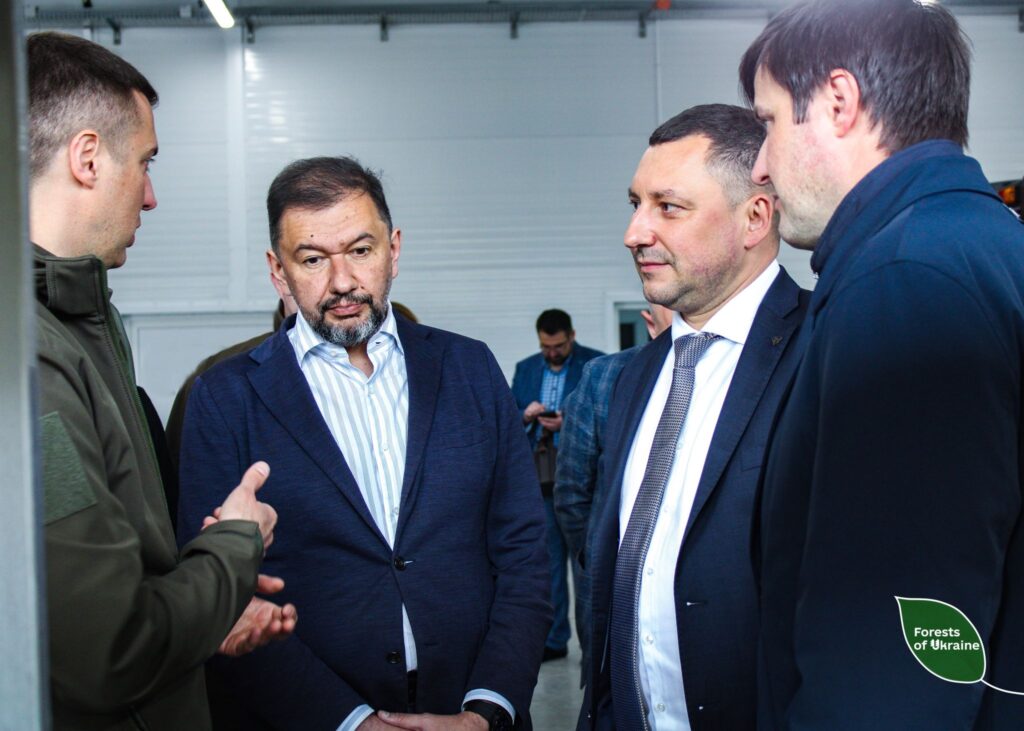
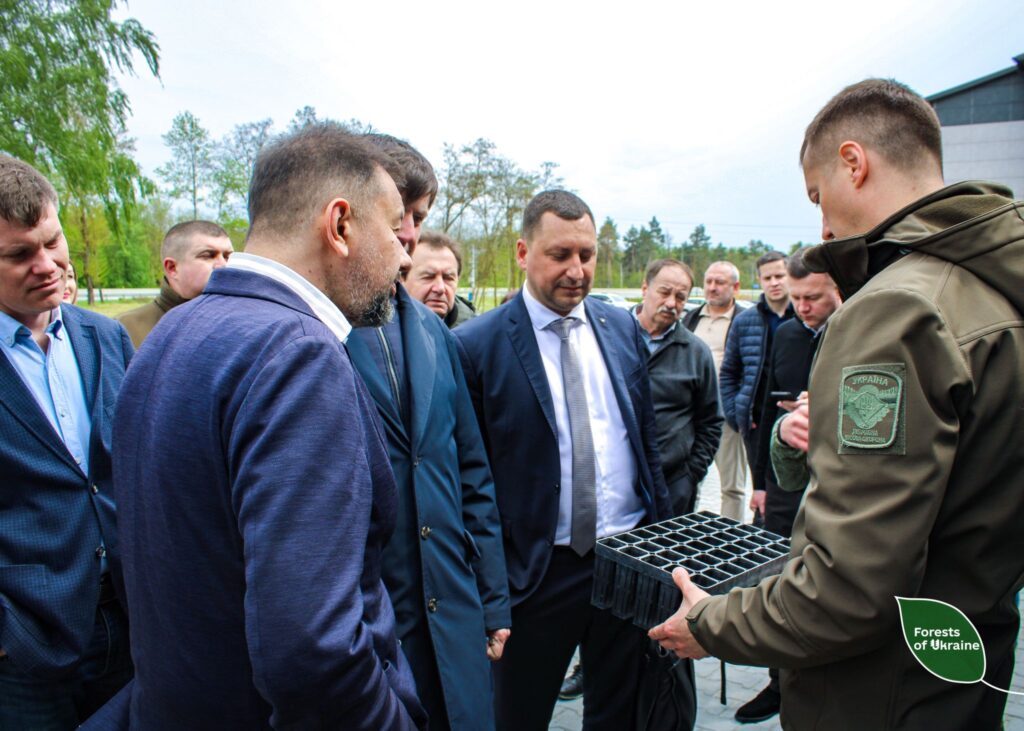
Legislative amendments were discussed during a meeting attended by Chairman of the Verkhovna Rada Committee on Environmental Policy Oleh Bondarenko, Members of Parliament, Deputy Minister of Economy Taras Vysotskyi, Head of the State Forest Resources Agency Viktor Smal, and Head of the Transformation Commission of State Enterprise “Forests of Ukraine” Ihor Zubovych.
Two years ago, in April 2024, the Ukrainian Parliament adopted as a basis Draft Law No. 9116 “On Forest Reproductive Resources,” which regulates the production and use of seeds, seedlings, and saplings of forest trees. The document introduces a legal framework for registration, monitoring, and quality control of forest reproductive materials in line with European legislation and standards.
As noted by Ihor Zubovych, Draft Law No. 9116 serves as a foundation for the further development of forest seed production in Ukraine, particularly the expansion of a network of modern seed and breeding centers. The enterprise already operates nine such centers, with total production capacity expected to reach 25–30 million seedlings annually in the near future. Investments in expanding the network in 2026 alone will amount to UAH 270 million.
Naturally, the priority remains the domestic market — producing high-quality planting material with a high survival rate for reforestation in de-occupied and war-affected territories. At the same time, Ukrainian products have every opportunity to compete successfully on the European market.
The meeting was deliberately held in Kipti, Chernihiv region, where the first phase of Ukraine’s largest seed center for growing container-grown seedlings with a closed root system began operations this spring. Construction of the second phase — outdoor growing fields — is currently underway, while the third phase, consisting of greenhouses, is scheduled for next year. Once completed, the facility will provide 8 million planting slots. Expanding the center’s capacity will enable plans for entering the EU market.
The participants also discussed legislative changes related to the corporatization process of State Enterprise “Forests of Ukraine”.
Since the beginning of the year, nearly 80,000 m³ of timber worth more than UAH 335 million has already been delivered to meet the needs of Ukraine’s Defense Forces. The average supply volume amounts to around 750 m³ per day — approximately 19 railway wagons of forest products daily.
Compared to last year, supply volumes have increased significantly. In the first quarter of 2026 alone, more than 50,000 m³ of timber was delivered to the Armed Forces of Ukraine — eight times more than during the same period in 2025.
The supply process is carried out through an organized cooperation system between the military and State Enterprise “Forests of Ukraine”.
First, military units identify their needs and submit requests. The enterprise then processes all applications and distributes them among its regional branches.
The largest volumes of forest products are shipped from the resource-rich Polissia, Capital, Carpathian, and Northern branches. Most of the supplies consist of coniferous species, with the highest demand for small-diameter timber.
The timber is delivered to frontline regions — Sumy, Kharkiv, Donetsk, and Zaporizhzhia — where it is critically needed for the construction of defense lines and other protective structures.
All timber is provided free of charge. State Enterprise “Forests of Ukraine” covers the costs of harvesting, transportation to railway stations, wagon loading, and also pays all taxes and fees to the state budget.
Another important area of work is supplying the military with firewood for heating.
Despite the end of the heating season, the housing and maintenance departments of the Ministry of Defense have already started preparations for the next winter and are conducting procurement through the Prozorro system. Once funding is allocated, tenders are announced, and the branches of State Enterprise “Forests of Ukraine” participate in them. The enterprise provides all necessary information regarding available volumes, delivery terms, and shipment capacities.
Since the beginning of 2026, the company’s branches have signed contracts with the Ministry of Defense’s housing and maintenance authorities to supply around 70,000 m³ of firewood. To date, more than 34,000 m³ of products have already been delivered.